Quo Vadis, Intellectual? The Paradox of the Guardians of Tirana’s Mosaic and the Gender Equality Law.
A polemical essay on intellectual conformity, artistic provocation, public debate and the Albanian gender-equality law, written in response to criticism surrounding an installation at the National Museum in Tirana.
There is a kind of naïve arrogance that does not come from urban life, but from a certain front of the Albanian “intellectual”: not an urge to defend one’s people, but to diagnose them.
Lately I have been reading self-important analyses by young researchers and doctoral candidates who label me as part of a “coordinated far-right attack” — laughable — simply because I dare to quote what I consider absurdities coming from Europe.
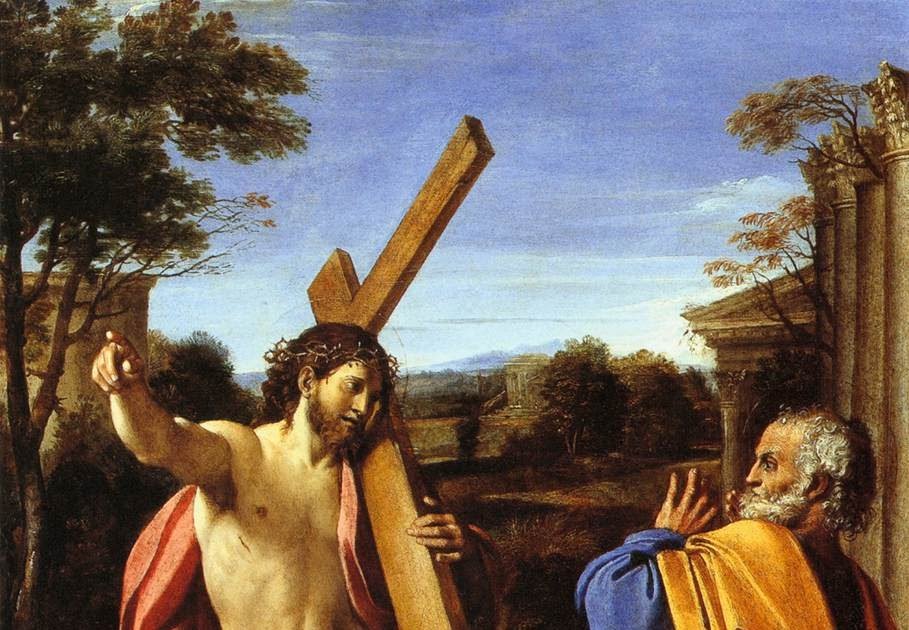
“Quo vadis, (intellectual) Domine?” — Where are you going, Lord? Do you remember the question Peter asked Christ as he fled his cross in Rome?
Today that question falls like a heavy slap upon every Albanian intellectual who is fleeing the cross of identity and moral responsibility.
In a social-media post, I raised a fundamental question, referring to the installation at the National Museum in Tirana: Is selective solidarity — breast cancer in women, but not pancreatic cancer in men — a new form of inequality at a time when we speak constantly about gender equality?
I was referring to equality itself. Health, I wrote, is not a gender issue but a human one. This was a substantive criticism of what I saw as the selective application of ideology in the way the mosaic was used.
Then an intellectual accused me of defiling the installation with “neo-fascist rhetoric”. Yet that accusation falls victim to what might be called the corrosion of discourse. Here the doctoral candidate has merely pressed her ignorance into a crisp shirt. She deliberately refuses the substance of the argument and avoids responding to my article or to the content of the new Gender Equality Law — Articles 4, 6 and 10 — focusing instead on the source of a quotation in the introduction to my piece “To Have or Not to Have a Law: That Is Not the Question”.
Dear friends, dear friends who have drifted away: here we are again, back at point zero.
Our community — especially the narrow circle of colleagues and artists — has failed spectacularly. It is not merely that my opinion affected my relationship with the artist behind the mosaic installation. The convictions I would not trade away also broke my relationship with intellectuals who once claimed to stand beside naked truth.
The most powerful political act is integrity without low blows: doing what you think, expressing what you feel, without the need to attack or impose your position as law.
And so I rediscovered that freedom of thought — even among friends — is a beautiful but fragile collective illusion.
The hard northern wind blowing through Tirana’s cafés is is the wind of the intellectual who has chosen to die without speaking the final word. It is no longer the smell of hand-rolled tobacco “from the Rrem box”, as the film joke goes, nor the smoke of grilled qofte drifting through the existential debates of an earlier time.
Today the sterile smell of fear disguises itself as European courtesy.
At times there appear intellectual hipsters who cultivate an aesthetic even in their choice of ideas, preferring fashionable theories by authors unknown to the broader public. It gives them only a hollow sense of anti-conformist distinction because, in truth — as they themselves frankly say — “we are beggars”. Up to that point, they have my respect.
Beyond that, however, in order to continue securing funding for the projects they care about, they say: “(...) it is an evil you can do nothing about; you have to make a pact.”
That pact also applies to those who describe themselves as “independent historians” or “researchers with different methodological approaches” — as the publication Përafrime presents itself, financed by EU4CULTURE and UNOPS — because the declaration of independence easily becomes a marketing claim that rarely survives the test of an unpopular decision or genuine criticism of the system that funds it.
Then there is the Albanian intellectual who reappears with double standards.
Years ago, when intellectuals criticised the National Museum of Medieval Art — in an article in PTF magazine and in a podcast episode — for allowing the filming of the music video “Picasso” near icons, they turned to Alexei Lidov’s theory of hierotopy and defended religious symbols against profanation.
They then proposed that the nation’s heritage itself should become an untouchable “sacredness”. The argument, put simply, was: “Let us regard the nation as sacred if we are no longer capable of preserving other forms of sacredness.”
Yet when the controversial installation of the “bald woman” was placed over the mosaic of the National Museum, many people saw that as a profanation of national sacred space. The intellectuals who once kept the drone of hierotopy either remained silent or vigorously defended the act.
When they wanted to stop rap music inside the museum, they argued that there were legal obligations — citing the ICOM Code of Ethics for Museums 2017 [2006], p. 25 — to respect religious sensitivity.
But when the woman on the mosaic is concerned, the mosaic suddenly becomes open terrain for experimentation.
This is not a struggle for values. It is a struggle over who is granted the right to profane.
In real time we see that if you are the voice of the new agenda, you are granted an intellectual licence to profane.
Money divides — money unites!
As an independent artist, I emphasize that modern art should unsettle, enter forbidden zones, provoke. Should it not? Wonderful.
Using modern art as a means of provoking social convention — a traditional role of art since the avant-garde — was clearly present in the approach of placing a hairless woman on the mosaic.
But this is precisely where the critical question implied by the installation itself arises: Is the Albanian contemporary art scene, and its criticism, ready for provocation in both directions?
Would a constructive discussion — the kind critical artists demand — still be permitted if the movement, or the community, represented by the author of the work became the object of a critical artistic provocation?
When someone strikes at standards or tradition, the intellectual says: “Look how profound — this person is ‘honouring’ tradition by challenging it.”
Seen from that side of the river, the game is accepted.
But try provoking “wokeness” — this new god of morality — with your modern art. What comments would explode across media, social networks, rainbow-flag protests and declarations of “non grata”?
Against every argument comes what so often comes: we love ad hominem.
On Facebook a note is carved into the wall:
“I would invite Eda to read, inform herself and understand the nature of the discourse she has chosen to amplify before recycling a neo-fascist rhetoric imported from abroad under the hypocritical guise that Albanians’ gender identity and family are under threat. This kind of mental constipation is indefensible! (...) From such a public figure I would expect silence, at best, or at least some curiosity to understand what the hell is actually going on.”
Dear intellectual, since you have again invited me to read, understand and inform myself about the Gender Equality Law — and I assure you that I have sincerely done so, contrary to your misplaced label — I will answer by borrowing the words of the engaged writer Janko Kalemi, in a comment where he defends his own article in PTF magazine:
“If you do not have time to verify the truth of the words you bring into a debate, no one has a duty to fill the gaps in your information, and that does not invalidate the other person’s reasoning. On the contrary, it proves that your participation in the debate is neither serious nor objective.”
I regret only one thing: that the debate remained nothing more than an order to be silent and an attack launched through smoke — without questions, without curiosity, without interest.
Beyond that, what you call “mental constipation” I call intellectual and parental responsibility.
I regret that we have not managed to create a genuine cultural and artistic debate that might bring us closer than we were before rather than push us further apart.
You expect silence?
I have carried out my resistance through silence and through words, while remaining in the hut with my own name above the door.
Those of you who wave the Istanbul Convention like a flag: which article are you actually raising to the sky? Article 4(3)!
Do you know what that article really says once we strip away all its solemn legal clothing?
In plain language: “If someone is struck on the head, you do not first need to ask which of the seventy-one genders that person belongs to.”
That is all. End of story.
It is, in essence, a traffic rule: a procedural non-discrimination clause. Yet you read this basic first-aid rule and then say: Here it is! This is the green light to reinvent gender from scratch and erase “father” and “mother” from the dictionary.
What kind of jurisprudence is that? It is legal sleight of hand dressed in fireworks.
“Out of evil comes good,” Goethe says, because evil serves as a measure, like a shadow that gives form to light.
Worry as much as you like, but today evil does not arrive dressed as Mephistopheles. It arrives as sterilized law that forces society to kneel before a boneless, formless language, compelling us to count genders without end or accept rules that the stomach of Albanian society is not yet able to digest.
The evil of our time, in my view, is the pressure to conform to a conception of gender equality detached from Albania’s many concrete troubles.
Let us ask directly, exactly where logic and law part ways:
How can one imagine protecting a fundamental category — woman — if the same legislation refuses to define her biological essence?
How can one stage such an “elegant” campaign at the National Museum around breast cancer, a brutally biological reality, when the image of the bald woman — like that famous bald Mona Lisa — is itself, in my view, a direct act of plagiarism?
The idea is not even original. It is a well-known campaign associated with the Italian ANT Foundation, which celebrated its tenth anniversary in May 2023.
So in addition to defending an epistemological contradiction, you promote a recycled cause, demonstrating that the true priority is empty symbolism rather than the substance of lived life.
At the same time, the ideology defended through the new law, as I read it, insists that “men too can have a social pregnancy”.
Really?
I am trying to understand the author of the law, but are the terms “mother” and “father” — those two words heavy with history, blood, origin and ethics — simply replaceable by sterile terms such as “parent 1” and “parent 2”?
And if we abandon the archetype of mother and father so easily, will we really stop at this first station of confusion?
Will the whole code of other family treasures be dismantled as well?
What is the modern, non-binary term that will replace the centuries-old relationship of maternal uncle, paternal uncle, aunt, or first cousin on the father’s side?
And precisely where the circle of generations closes, will we see the simple disappearance of grandfather and grandmother — symbols of memory and storytelling — merely for the sake of an all-inclusive non-binary dogma or an alleged list of seventy-one genders?
Should the Albanian family simply accept that this deeply rooted human code, this value placed on kinship, be dissolved into “a family member of an equivalent relationship”, merely because a sponsored law seeks to install a new social software, turning human inheritance into a compulsory update?
Photo: Otto Dix, Die Eltern — The Parents (the artist’s parents), 1924.
I cannot sidestep Hannah Arendt when she says that totalitarianism does not need classical monsters, but ordinary people — intellectual bureaucrats — who simply “obey” and stop thinking.
Beyond the purple dictate, there is also the reality of people who work and live with good, grounded souls — gay men and lesbian women who are part of our society.
They are our people, with whom we give and receive respect every day.
All of us want a peaceful life in Albanian society because, at the end of the day, we are human beings.
They did not insert themselves between the partnership the law should have with parents who support the family; nor do they want to interfere with the education of children at an age when identity is still developing; nor do they intrude into anyone’s four walls.
The great trouble is that we now live in an age in which being “cultured” no longer means seeking truth at any cost, but knowing exactly which truths are supposed to be ignored.
Personally, I tell no one to be silent.
But the role of propaganda exhausts us just as the intellectual once exhausted us with the old slang: “In Albania everyone plays according to their own tune; here we play ours, and someone else has their own.”
Keeping to my own tune, I pray for peace, but I do not negotiate for it.
I have my own name and that is enough for me.
And yes, I am “a little of everything”. I am everything that is not divided into two camps, and I take from everywhere what seems meaningful to me. Above all, I am pro-child.
So, dear intellectual, consider yourself understood — and even warmly embraced by me.
As long as we remain inside the rhythms of writing on Facebook, Instagram and TikTok, we are friends who will eventually meet and say: “We got torn apart in lost in translation, and exhausted ourselves doing favours for the networks.”
Of course I know that in this infinity of human comedy comes the bitter peace of acceptance: Così fan tutte.
But again I ask: does the intellectual still have an ear left for the free voice?
Because that voice does not arrive as a prelude. It arrives as a plain act, served on the plate of life.
Postscript:
I know what you will say: Eda Zari, this has gone on for far too long.
True. I like narratives and deep elaboration. But unlike much of what you are accustomed to seeing, the words here are entirely my own and independent. It has not been sold, and it has not been paid for by any string of institutional logos.
For that reason, dear intellectual, please read it da capo.
Because the essential takes time, and freedom of thought deserves every word.
© 2025 Eda Zari. All rights reserved.
CONTINUE READING →