Flamingos and the Craft of Ordering Up Heroes!
A reflection on public shaming, ordered heroism and the ethics of civic resistance — on why conscience cannot be summoned by command and why every person must remain free to choose the form of their own response.
Noise
There is a strange tendency today to confuse noise with change. Frank Zappa understood this long ago when, with his razor-sharp irony, he said that the human mind works like a parachute: it has to be open, otherwise it simply falls.
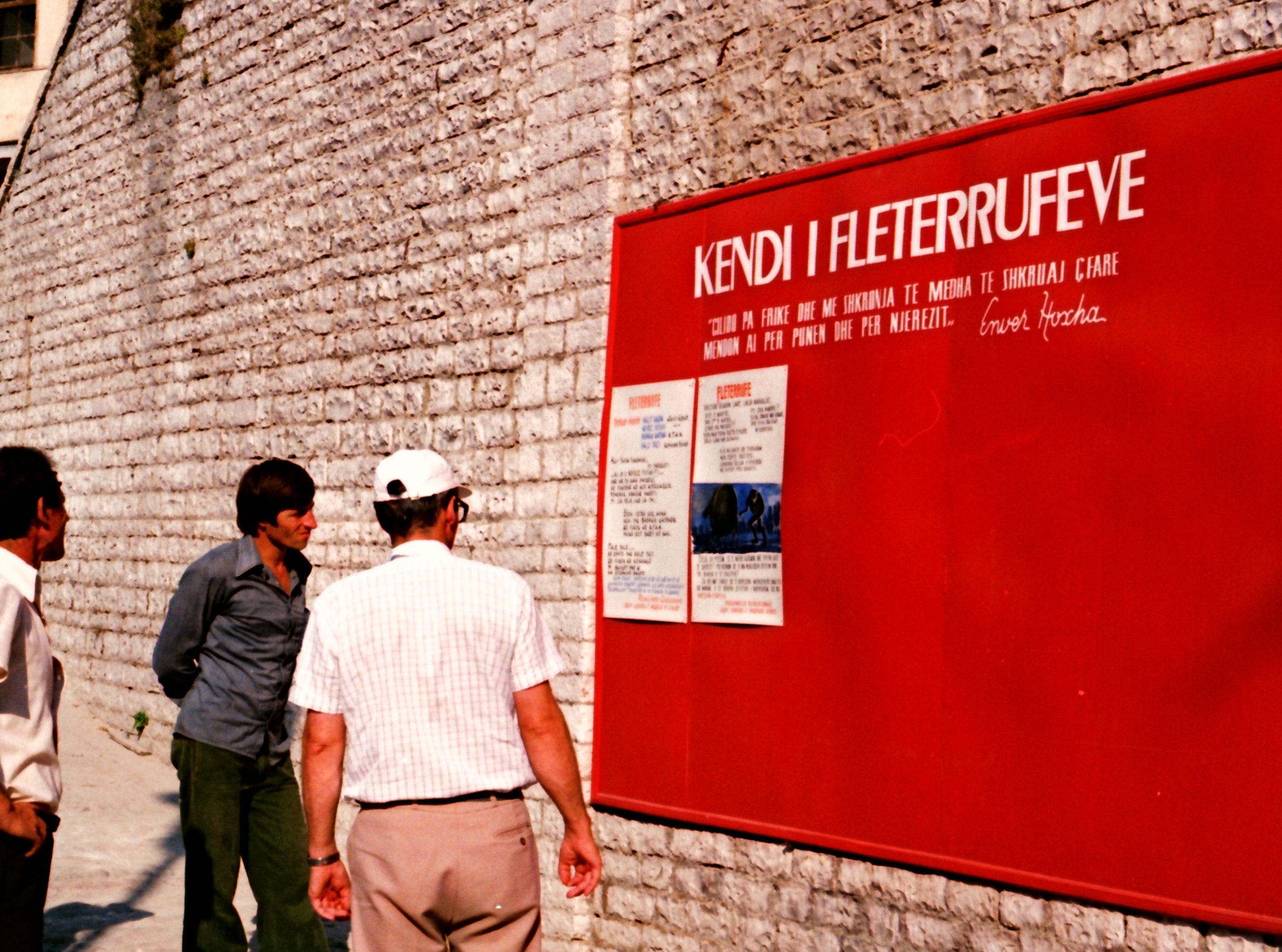
Fletërrufe.
In our culture of reaction, in a society where the megaphone is often used not as a tool for awakening conscience but as an ornament for the ego for those who want to appear to be doing something, the stick quickly comes down on anyone who is not shouting in the same square, in the same tone. It is not uncommon in our public space for the spirit of judgment to move faster than understanding.
Recently I saw my own image placed alongside some of the most worthy and representative names of our culture — classical musicians, sopranos, violinists and others performing on world stages. I will not publish screenshots of the post with our photographs and names, because I do not want to amplify or recycle that same fletërrufe. These were people put on the wall of accusation — people who have carried the dignity, the name and the values of Albania to the highest peaks, never hiding where they come from, but insisting proudly on their roots. People whose careers and names were not handed to them by anyone, but built through talent, discipline and hard, independent work.
What leaves a bitter taste is not being compared with them — on the contrary, it is an honour to stand in the same line as these colleagues. The bitterness lies in the way these figures and images are used as a “backdrop” or as targets in digital fletërrufe, often even by anonymous or false profiles, in order to feed moral judgments about the form an artist chooses for a response.
The Public Tribunal
But this mentality of the public tribunal is not new. It is simply an unhealed residue that has changed its form and become digital.
In 1972, on the walls of the dictatorship, there appeared a tragicomic fletërrufe whose target was none other than Lasgush Poradeci — the poet of the stars, the man for whom the book was body and the word was blood. Do you know what his “crime” was? He had kept a National Library book beyond the due date. For that he was publicly crucified for “violating proletarian discipline” and threatened with the Penal Code. Those who had never read or understood a single profound line in their lives dared to pass moral judgment on a genius.
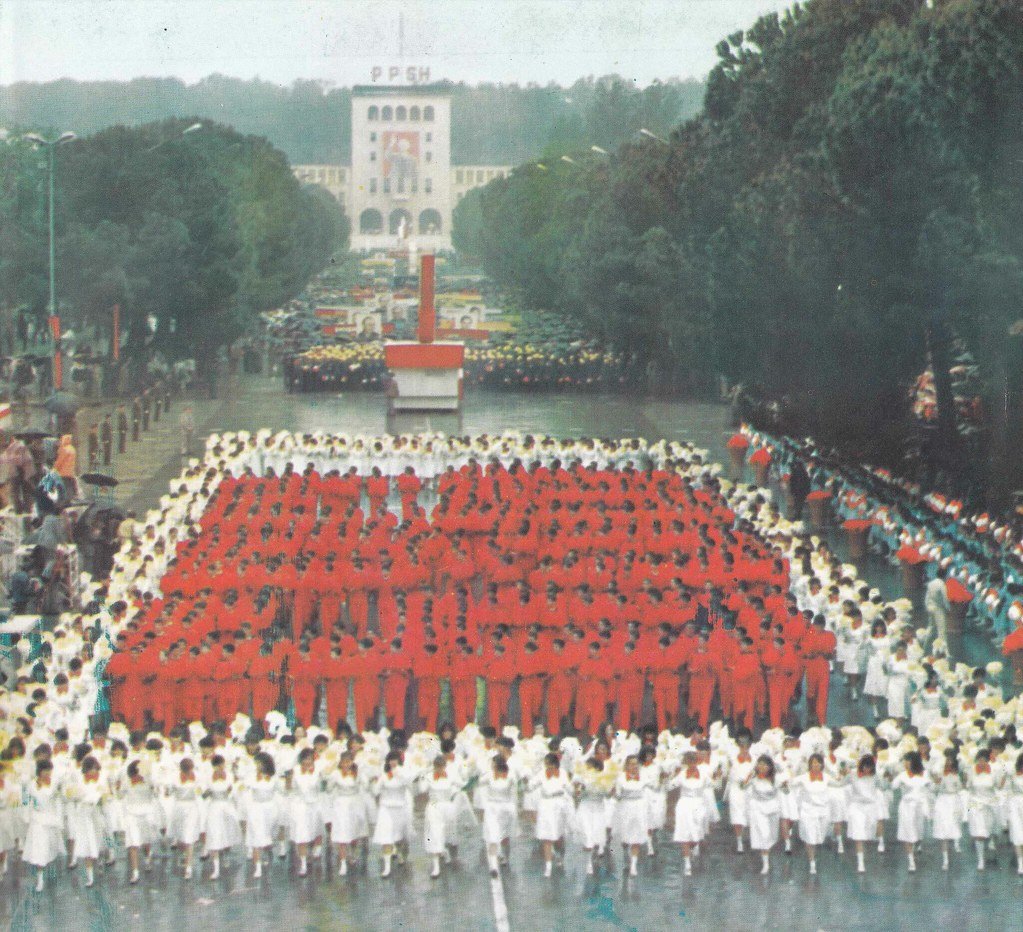
Today, the words “proletarian discipline” have been replaced by “civic duty,” measured according to the yardstick of one’s own sofa, and “the wall of our village” has been replaced by the wall of Facebook, Instagram & Co.
And so I come to today’s fletërrufe...
The fact that an artist, scientist or academic does not march in a square and does not keep step with “you” does not grant you the license of a council secretary to pin a denunciation on anyone. It does not prove “your” vigilance on behalf of the homeland; it merely carves the limits of “your” ignorance into bas-relief.
Your step is not my step, just as your megaphone cannot be my instrument.
Commitment to nature and to the troubles of this society is not a military column marching in a May Day parade, where everyone is expected to shout: “...we are ready at all times.” Fortunately, genuine freedom of response rejects the brigade step. It has fought its way along difficult paths and developed many forms of resistance — and none of them passes through the judgment of “your” sofa.
Ordering Heroes
When a society begins to force someone to carry its own frustration, or expects the academic, scientist or artist to become a “hero” on command, it is worth recalling the famous dialogue from Bertolt Brecht’s Life of Galileo.
In Life of Galileo, Brecht does not merely create a theatre of ideas; he lays bare one of the most enduring pathologies of human society. When Andrea — with the anger of a young man who wants martyrs so that the world may be put right — cries out to Galileo, “Unhappy is the land that has no heroes!”, the ageing scientist, exhausted by the Inquisition and by the pathos of the crowd, answers with a sentence that cuts like a razor: “No. Unhappy is the land that needs heroes.”
That is where the whole enigma begins to unravel.
Why should a country that needs heroes be unhappy? Because the demand for heroes is, at its core, evidence of the bankruptcy of everyday responsibility. When a society has not put its affairs in order, nor properly worked through all the traumas of totalitarianism — when the law becomes an elastic band in the hands of opportunists, when truth is sold in the marketplace and honest daily work yields no dividend — then society begins to look for “saviours.”
It wants someone to become a sacrificial victim in its place. It wants a figure to climb onto the platform or enter the square, hold the megaphone and absorb everyone’s blows, while the others remain at their doorsteps, hands in their pockets, watching the spectacle — or head to the stadium with that globe in the arena.
Conscience
Since 2013, together with artists such as Elina Duni, Linda Rukaj, Vlashent Sata, Ilir Bajri, Erjon Zaloshnja, ASLV, Klejdi Eski, and many valued colleagues from different fields of science, local activists and members of the diaspora, historians, visual artists and others, we were among the first to organize concerts and awareness initiatives that were entirely peaceful, by our own means, without political interest, without any party or party funding behind us, guided only by the call of conscience.
When we launched the initiative — the song “Lum lumi i lirë” — in defence of the Vjosa and Valbona rivers, we did not see “rivers of people” rise and fill the square. There were no great crowds insisting on the protection of the National Theatre either, nor when we urgently needed to raise public awareness against chemical-weapons waste.
Back then, we learned very well how effortless media and social judgment can become. In pseudo-debates on television we were mocked with the line: “These people from the diaspora come, sing a little tra-la-la, then leave to drink coffee in Paris.”
We knew the reality was entirely different: years of resistance and effort inside and outside the country, beset by blackmail and contempt, simply for defending the rights of the land, the rivers — the Vjosa, the Valbona — the air, the soil and our dignity.
But do you know what has mattered most throughout this journey of decades? The ethics of communication.
When many of our colleagues did not answer our invitation to join those concerts, none of us went out with a fletërrufe to accuse them. No one tagged their photographs on Facebook and demanded: “Why are you silent? Why aren’t you joining us?”
Why did we not do that?
Because we understood the burden, the pressure of daily life, the fear, and perhaps simply each person’s choice. Because we knew that conflict among artists does not arise from a lack of love for one’s country, but from the different forms through which each of us chooses to express that love.
We never built our activism by creating hostility between those who are “here” and those who are “there,” between those who carry the megaphone and those who sing for the land in silence.
And yet there is a deep, bitter irony today in those who appear online demanding explanations with photographs and slogans. A good number of those who now expect artists to launder their consciences on their behalf resemble the warning in Martin Niemöller’s post-war poem: “When they came for the communists, I remained silent — because I was not a communist. When they came for the trade unionists, I remained silent — because I was not a trade unionist. When they came for the Jews, I remained silent — because I was not a Jew. When they came for me, there was no one left to protest.”
Today, the protest and civic movement we are witnessing flows through many channels, carrying many kinds of grievances and forms — from flamingos and pelicans, to handwritten cardboard signs and shoes, all the way to analytical and philosophical articulation. And this is an extraordinary richness.
There is no monopoly here, and there must be no uniform model of response.
George Steiner reminds us that the artist bears witness to their time not by taking up daily positions under the pressure of the crowd, but by creating works and actions that safeguard the dignity of human beings and of nature.
So let each person give their own form to their response. Let each speak for the concerns rooted in their own doorstep and community — where they know best, and in the way they know best.
But one thing must remain clear: we do not need heroes ordered up by the self-appointed wardens of social media. We need citizens who understand that another person’s freedom to respond in their own form is the very essence of freedom itself.
The dignity of any cause is not measured by how easily you place a colleague’s photograph in the crosshairs, but by the ethics, empathy and respect with which you build coexistence in this vast forest of ours — a forest that needs every tree, every root and every voice.
And yes: the Artist will rise and sing in order to awaken conscience and revive the spirit of resistance when truth speaks to them — not when an order arrives by way of a fletërrufe.
The Artist will give voice — Za — when they are no longer treated as some “deranged bourgeois” by a society that refuses to understand that nature, land, water, air and dignity are every bit as vital as “the bread on the table” and the chair that keeps one employed.
Coda
Post Scriptum:
And to make the accusation of “silence” even more absurd, let me remind those who stand with scissors in hand, ready to cut out the next fletërrufe, what I published on this network as early as 9 June 2026, when this current of protest was beginning to gather force:
“My people, what a new reason for pride! Let us understand now that this protest no longer needs awareness campaigns, nor our moralizing. There would be something artificial in poems recited on command, songs neatly lined up, microphones, loudspeakers or platforms erected in haste. Truth, naturally, has no need of stage design.
In fact, genuine protest is beautiful precisely because it is organic — just as the Vjosa and Valbona once were, with branches and deltas choosing for themselves where to flow.
Can anyone lay down rules for the course of a river? Then let us not imagine for a moment that the revolt of a people needs a director!”
I said it from the heart: Proud of your voice, my Albania!
Not only have I not been silent — this blog also contains recent writings on the power of the “Flamingo Revolution” — but I foresaw and rejected even then exactly what some are trying to do today with these fletërrufe: imposing “compulsory podiums” and compulsory moralizing.
Because just as a river chooses the bed through which it will flow, every citizen and every artist chooses their own form, their own voice and their own way of resisting, without anyone needing to conduct an evening roll-call of protest.
© 29.07.2026 Eda Zari. All rights reserved.
CONTINUE READING →