To Have or Not to Have a Law: That Is Not the Question!
A critical essay on Albania’s 2025 gender-equality law, inclusive language, political symbolism and the tension the author sees between legal categories, biological sex, family life and social reality.
“Mr President, ladies and gentlemen... honoured homosexuals, honoured lesbians, honoured androgynous people, honoured bigender people, honoured female-males, honoured gender-fluid people, honoured intergender people, honoured genderqueer people, honoured intersex people, honoured asexual people*, honoured males, honoured male-females, honoured agender people, honoured non-binary people, honoured pangender people, honoured transgender people, honoured trans women, honoured trans men...!”
This is how German parliamentarian Steffen Königer begins his speech in the Brandenburg state parliament.
This short video, translated and circulated in Albanian on an almost unprecedented scale, has raced through social media, generating millions of clicks. For an Albanian audience, the party to which this politician belongs is of little importance; the clip is being discussed relentlessly.
Determined to leave absolutely no one out and to demonstrate an unrivalled commitment to inclusion, his list becomes more and more specific, adding terms such as: “honoured hermaphrodites, honoured third gender, fourth gender, cross-gender people, honoured XY women...” and finally “Drag!”
The greeting reaches the impressive figure of sixty-one genders before the member of parliament even begins his actual speech.
The reaction inside the German chamber is as viral as the list itself, accompanied by laughter.
Although the video dates from nine years ago, 9 June 2016, what has made it explode in Albania is that this long list of identities can sound, to an Albanian ear, like pure absurdity.
But why is this video being shared with such ferocity?
Are people commenting and laughing for the same reason as those inside the Brandenburg parliament? Is it being circulated simply as an absurd curiosity, or as a context-free meme?
Today, it seems, in addition to knowing who you are beyond biological facts, you are expected to know exactly how you feel and what you wish to be called. And above all, you are expected to make this known through inclusive language.
In the comments one reads that this is the perfect example of what awaits Albanian society as it implements the principles of the new Gender Equality Law (2025), especially Articles 4(e, ë), 6 and 10.
Heaven forbid anyone should so much as squeak.
Beyond this linguistic pressure, apparently a new law is needed to solve the problem of our vocabulary...
Once, somewhere, someone wrote: “These people do not understand that if you encourage the use of totalitarian methods, the time will come when those methods will be used against you, not beside you.”
Very well, then. Let us give the question a concrete form.
Since we have solved the issue of “equality”, sewn it neatly into law and stamped it — job done, right? — why exactly must we now concern ourselves with this other exhausting business of “political correctness” and “gendered language”?
Is this the bureaucratic appendix we forgot to read at the end of the equality contract?
We are simply asking, because on paper... everything is supposedly fine.
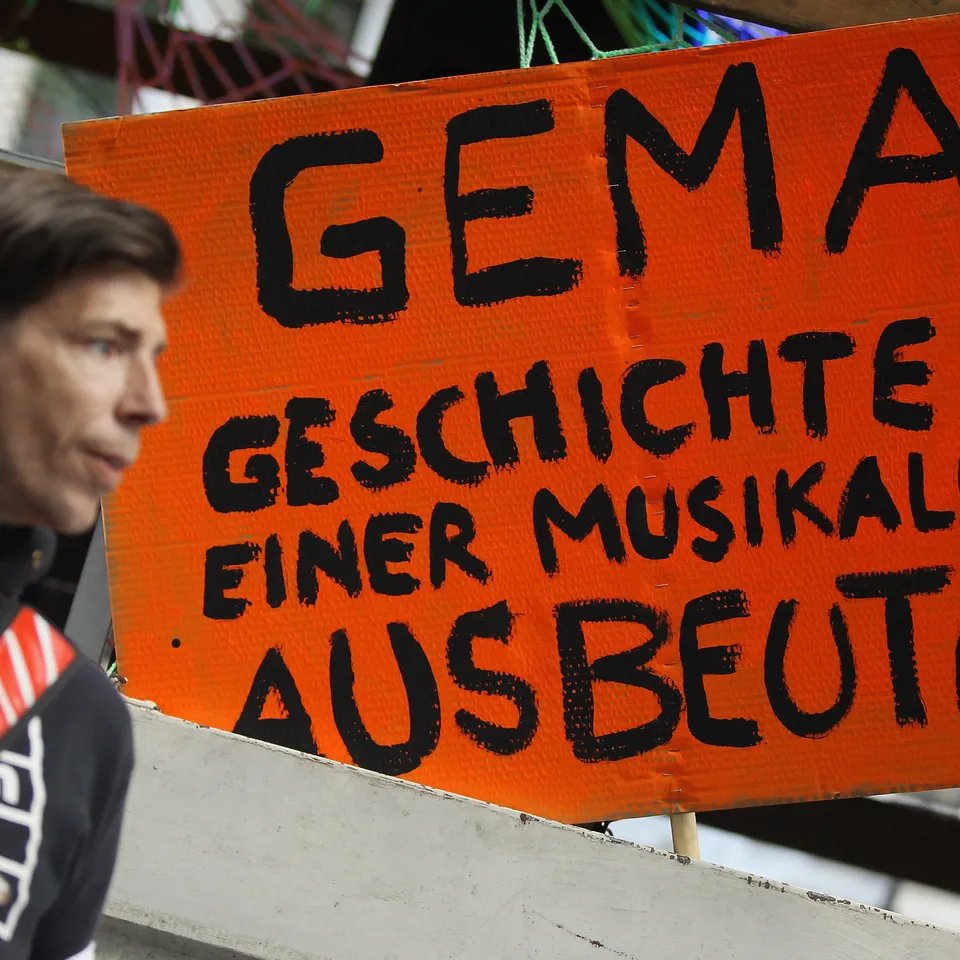
As the late publicist Artan Lame observed sharply in an analysis from May 2015, movements for LGBTQ+ rights can sometimes risk becoming victims of their own methods.
Exactly a decade ago, he argued that associations working with European funds and projects, when they fail to receive the attention or real support they expected — as happened, in his account, with one of their marches, which provoked neither support nor opposition from the capital’s public — can become aggressive, imposing and provocative.
According to his argument, this hardening becomes necessary not in order to fight homophobia — which Lame regarded as a communist relic rather than an Albanian tradition — but to justify the organizations’ own existence and funding.
Thus, if the community does not resist, the lobby, in his description, survives by increasing the “trouble” and pressuring society.
Now, it seems, no one is allowed to express a feeling or opinion about these matters without risking the response that it is “forbidden by law” and the risk of being publicly branded.
In this form, the discourse shifts from a demand for rights to the imposition of silence.
Deputy Minister of Health Seferi says:
“This law does not provide for genders. This law provides for non-discrimination. This law provides for equality between men and women. This law sets out what gender means (...) it has nothing to do with the biological determination of sex; this draft law does not define genders. Nowhere here do we speak about transgender people, and nowhere do we speak about surgical interventions. This law does not speak about introducing or bringing in other genders. Specifically, it does not speak about families or marriages (...)!”
In my view, the official’s reassurance collapses into banality. It becomes its own most emphatic public denial when set against the written text of the law.
This, to me, is precisely an exercise in what Orwell called “doublethink”: asking people to believe the official statement rather than the written fact.
To my mind, it is an epistemology of ignorance turned into state strategy, where the final purpose of the law is not what is publicly said.
The mechanism, as I read it, is to relativize what stands there in black and white, then marginalize it and finally make certain values invisible.
Articles 4 and 6 of this “noble” law, as I read them, marginalize biological fact — man/woman — in favour of the less precise concept of “gender identity”.
And in the end, the words “man” and “woman” become invisible, replaced by the new vocabulary of “inclusive language”, which the government has made mandatory through law — I am referring to Article 10.
Many of us have probably read The Good Soldier Švejk — or at least heard of the “wise idiot”.
The analogy is this: as with so many things in the past, our society may survive this absurdity by appearing utterly foolish while simultaneously exposing the real foolishness of bureaucratic officials and of the system as a whole.
The declared objective is the “removal of gender stereotypes” and of “cultural patterns”.
But the article does not stop with the news media. It requires this new language to enter “certificates, diplomas, academic titles, ... school textbooks, ... scientific papers and references”.
Point 4 of Article 10 states: “The Council of Ministers is charged with determining, by decision, the rules for the use of gender-sensitive language.”
Here the logical question rises from the page:
Why should the Council of Ministers need to invent “new rules” of language if the words “man” and “woman” are sufficient?
A few days ago I expressed this concern to someone. The response was:
“It seems to me you are slipping a little into conspiracy theory. Things are very simple: the subject of the discussion, the equality law, is perfectly clear. I suggest you read it.”
In another context I might have laughed off the accusation of “conspiracy theory”.
But let me raise the matter again, since I am now surrounded by laws, documents from 2008 to 2025, and the Istanbul Convention.
Not to regard as intentional the decision to place “gender identity” in Article 4 above anatomical fact, and then to build new provisions in Article 12 around that new reality, is, in my view, blindness.
To believe Albania will begin speaking in “inclusive language” under Article 10 within six months simply because this was written into law is dogma, not jurisprudence.
I tell that “someone” — and all those who applaud the arrangement — that “these methods will also be used against you”, because what I see is an architecture that promises an “Eiffel Tower” without explaining where the iron will come from or what will happen to the foundation stones.
Across Europe, terms such as “gender equality” and “non-binary” are increasingly being criticized in some quarters as empty slogans, particularly by currents within gender-critical feminism.
A prominent figure such as Alice Schwarzer (1) in Germany has systematically challenged this discourse, arguing that excessive emphasis on “gender ideology” and on inclusive language — including the use of the Genderstern (2) — represents an academic “luxury”.
According to her, this diverts attention from what she regards as feminism’s core problem: real violence and oppression directed at biological women.
Schwarzer warns that recognizing gender identity over biological sex through self-identification laws may endanger women’s protected spaces such as shelters, women’s prisons or sports competitions.
Criticism of newer legislation such as Germany’s Selbstbestimmungsgesetz (3) has also been voiced by the German Medical Association.
Its critics express deep concern about minors and insist that no person under eighteen should be permitted to change their official sex without comprehensive psychiatric diagnosis and counselling.
They argue that the law incorrectly equates a “subjective feeling” of gender identity with “factual biological sex”.
From this medical perspective, sex is described as a biological, binary and immutable reality that should be clearly distinguished from gender identity.
One vice of modern politics, in my view, is the prioritization of symbolism over substance.
We pass laws that glitter in Brussels while heating in village schools and neighbourhoods on the outskirts of our cities continues to be treated as an unaffordable luxury.
It is the same with breast cancer.
We have become masters of the symbolic act.
We inaugurate awareness mosaics featuring bald women because this immediately gives us the feeling that “we did something”, that the act is visibly moral.
Meanwhile, the brutal fact that a poor woman with a serious diagnosis may still lack equal access to life-saving medicines remains unresolved.
It seems we have confused the means with the ends.
The greatest danger, in my view, is not discrimination itself but the fear being planted in citizens, particularly young families.
Fear born of ambiguity in the law; fear about the possibility of genital interventions at a young age without an essential medical reason; fear of permanent conflict.
This fear, which in extreme cases has been associated with suicide, threatens the fundamental desire for human bonds and for creating life.
By focusing excessively on feeling, the law, in my opinion, fails to guarantee justice and clarity and does not serve the true well-being of Albanian society, which needs real equality, not war.
Do we want to talk about equality?
This is the tangled moment in which, while people speak with pathos about “equality for everyone”, what we are actually living through is an “equality of impossibility”.
The absolute and unquestionable priority should be to eliminate that hypocrisy, without turning terminology itself into politics or telling little stories such as the old “Omeri i ri” or supposedly “naïve and unidentified” homosexual songs in folklore, such as “Jalla Zot shkarkofshin ktu” or “Amon kam një babe”.
In artistic and creative environments — and not only there — I am surrounded every day by colleagues, friends and relatives with their own sexual orientations.
Everyone has their own “four walls”, just as all of us do, and we coexist beautifully and harmoniously.
No one burdens anyone else or tries to impose personal preferences.
After all, that is the point: does the taste of your espresso really depend on the pronouns of the person who placed it on the table?
But... this is where I hesitate.
Are we confusing the peace we have learned to build among adults, who have found their own path, with what a child needs?
A child, a young person, is still “under construction”; their personality is not yet consolidated.
Why should we make them more confused than they already are?
Would it not be better to give them time to understand themselves before loading them with categories and choices that perhaps even we adults have not fully digested?
As long as this delicate process of becoming oneself is not put at risk, everything is fine.
Beyond that point, are we certain that this is not exactly what we are doing?
Beyond every legal trick or calculation, love, wisdom and the intelligence of life itself call us to the place where love becomes affirmation.
It is not excessive at all to cross our small divisions even without a legal framework, without exchanges or calculations.
Only by loving life in its totality can we find the equality and human connection we seek.
But at the heart of it lies one question:
Will we, in the end, become the society that loved the idea of equality so much that, out of fear of living, it decided to declare it dead in the name of a law?
© 2025 Eda Zari. All rights reserved.
Cover image © Gross.
[1] Schwarzer is a journalist and one of Germany’s best-known feminists, founder of the magazine EMMA (1977), a key but controversial figure of second-wave feminism known for her strongly critical positions.
[2] The Genderstern is a specific device of written German, the typographic symbol *, used to create gender-neutral and inclusive forms.
[3] The direct translation is Self-Determination Act. Literally: Selbstbestimmung = self-determination; Gesetz = law.
CONTINUE READING →