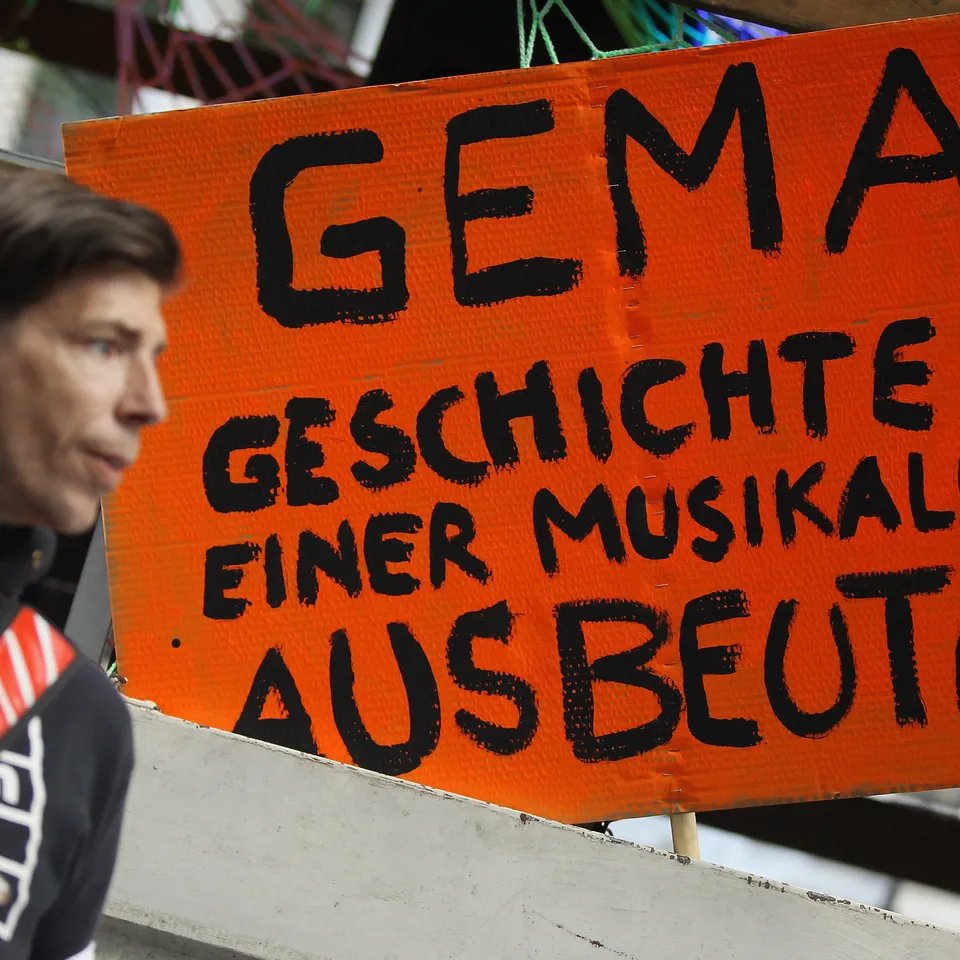
Culture in the Blind Spot: Why the Balkans Remain Off GEMA’s Radar.
An essay on the asymmetry of copyright administration between Germany and the Balkans, the fiduciary duties of collecting societies, and the material survival of creators.
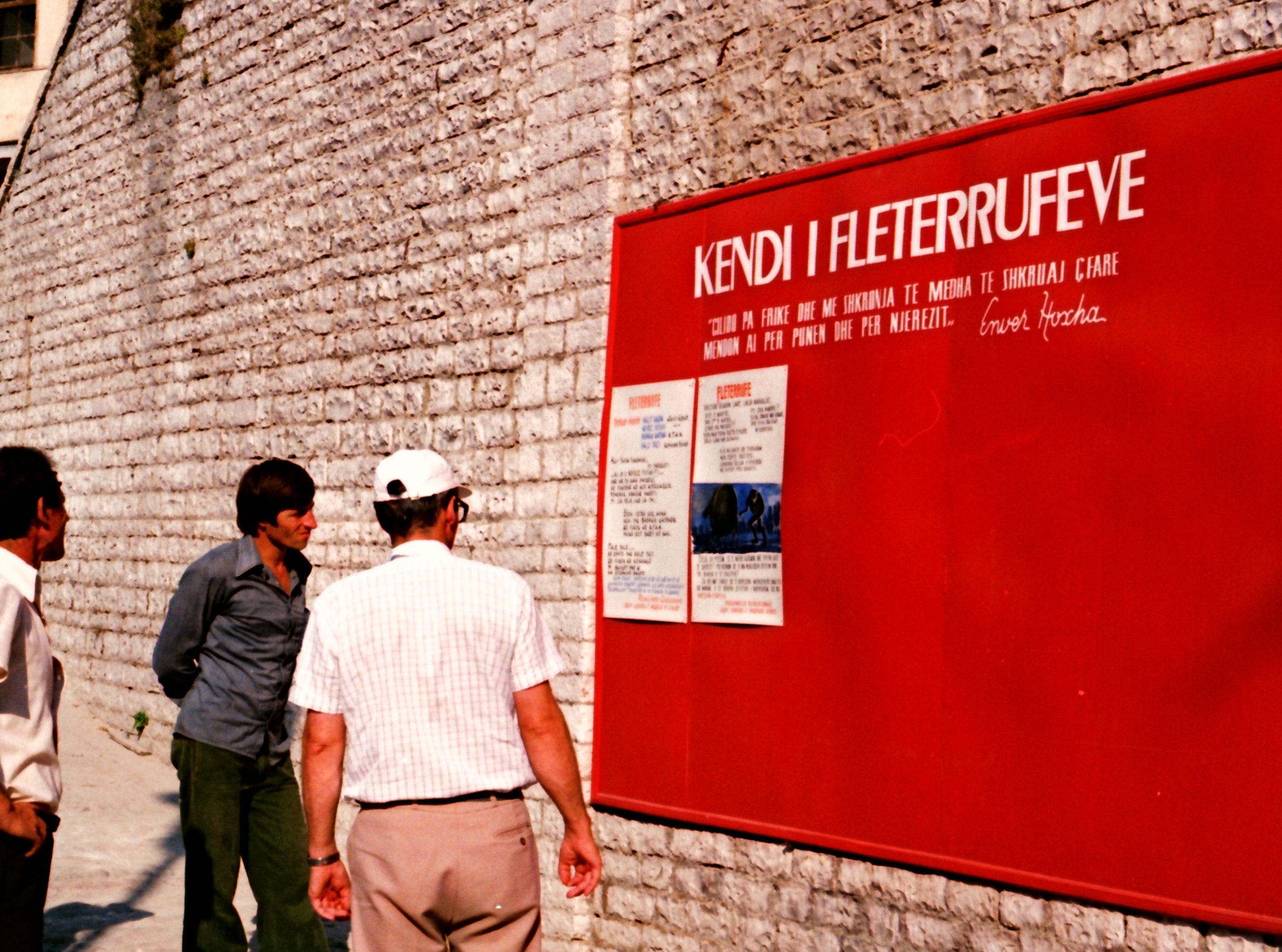
Anyone who devotes themselves to music begins by believing in a universal grammar. Sounds know no border checkpoints, rhythms do not stop at customs, and a melody unfolds its resonance in Tirana’s concert hall with the same existential force as in Hamburg’s Elbphilharmonie. Yet as soon as the final crescendo has faded and the instrument falls silent, the world behind the stage reveals itself as a profoundly asymmetric geopolitical construct. Art may be borderless; the systems that exploit and remunerate it are not.
As an artist living in Germany and working internationally, I chose GEMA consciously years ago. It was an act of faith in an institution born as a milestone of the European Enlightenment: the transformation of free artistic spirit into a protected and legally enforceable right. The system rests on a noble premise — that intellectual property is not alms, but the material ground on which cultural autonomy can flourish.
Set out on a concert tour through the south-eastern reaches of our continent — Albania, Kosovo or North Macedonia — and one encounters a peculiar dialectical fault line. On paper, the harmony of international law appears complete: the Berne Convention, CISAC’s reciprocal agreements, the principle of territoriality. The architecture of international copyright claims universal validity.
An Albanian collecting society such as ALBAUTOR is mandated by law — under Albania’s Copyright Act No. 35/2016 — and by bilateral arrangements to collect remuneration for GEMA-protected repertoire performed at concerts on Albanian territory.
Those royalties, accompanied by meticulously submitted set lists, are meant to be transferred to Germany in fiduciary trust.
GEMA, in turn, distributes the proceeds to its authors.
So far, this sounds like the promise of a fair reciprocal system. Empirical reality, however, looks more like structural aphasia: an institutional muting. The flow of money and recognition is not a pulsing artery but a one-way street. When an artist from the Balkans performs their repertoire on a German stage, GEMA’s bureaucratic apparatus intervenes with its familiar Prussian precision: every bar is registered, every cent licensed and transferred. Move in the opposite direction, however, and the right itself seems to seep away into no-man’s-land.
For years, ALBAUTOR has, with systematic nonchalance, neglected its duty to account for, document and forward live-performance royalties. The intellectual work of German authors is consumed, applauded — and then dissolved into the ether of bookkeeping.
One might dismiss this as a local deficit, one of the familiar growing pains of young societies in transition. But the real philosophical and cultural-policy crisis lies deeper. It lies in the blind spot of our own collecting society. GEMA looks away.
Instead of enforcing, with the rigour expected of a trustee, its contractual rights of inspection, control and audit vis-à-vis its sister society in the Balkans, a comfortable lethargy prevails in the offices of Munich and Berlin. Behind it lies a cynical economic calculation that runs directly counter to the ethos of the German Collecting Societies Act: because the markets of Tirana, Prishtina or Skopje are small in sheer volume, the legal and administrative conflict simply does not “pay”.
Here the gradual betrayal of fiduciary duty becomes visible (§§ 9, 51 ff. VGG). The statutory duty of representation does not distinguish between lucrative metropolitan core markets and the periphery. Once a collecting society begins to tie the protection of authors to margins of profitability, it abandons the principle of solidarity and degenerates into a financial service for those who are already established.
The grotesque consequence is that we authors are forced to become unpaid private detectives of our own work. We research contracts, chase set lists, remind organisers of their obligations and demand evidence — doing precisely the work for which we mandate an institution and pay through deductions from our income.
This touches fundamental questions of European cultural diplomacy. How credible is a European community of values if, at the most elementary level — the protection of intellectual property — it tolerates the institutionalisation of lawless spaces at its outer edges? Cultural exchange degenerates into farce if it is not sustained by mutual respect for the material existence of the people who create art.
Copyright is not an exclusive privilege of wealthy core markets. It is indivisible.
If cultural policy is to be more than ceremonial rhetoric, and collecting societies more than custodians of established privileges, then Europe’s blind spot must be brought into the light. What is needed is an unequivocal twofold strategy: ALBAUTOR must, through international pressure and the threat of losing CISAC representation, be compelled to ensure complete registration and distribution of revenues. At the same time, GEMA must immediately establish an active audit and oversight commission for the Balkan region.
The value of art is not measured by the size of the market in which it resounds. And a trustee’s duty of loyalty applies without exception — to every single bar, every single cent, and every person who has devoted a life to creating music.
27 September 2026. © 2026 Eda Zari. All rights reserved.
CONTINUE READING →