“Oh, You Killed Me!” The Unopened Files.
A deeply personal essay built around a 1990 diary entry, the killing of Eda Zari’s brother Ilirjan at Albania’s border, the Sigurimi files and the unresolved question of legal and social accountability after dictatorship.
“Monday, 5 February 1990 — 8:00 a.m.
I get up.
Just as I sit down to eat, Myfit from the Branch arrives by car and takes us to the Branch.
The house is left behind, with the little boy (1), the door not even locked.
Going there feels as if we are being taken to be hanged.
Me, J. and D.
D. goes in first. An hour and a half later she comes out extremely upset.
J. goes in. She comes back the same.
Then I go in.
In the office are the head of the section, Myfit, and another man.
They begin questioning me.
They ask me about Liri and Gimi.
They slap me, punch me and beat me with rubber truncheons.
They insult me with the filthiest and most humiliating words.
They are scandalous moments.
I cannot bear being inside myself.
They keep me for about two hours, questioning me.
I am terribly upset, almost as if someone has died, and the rubber truncheon has left marks on my body.
When I come out of the Branch, J. and Beni — Rizai’s son — are waiting for me.
I cry all the way home.
There are many people in the house.
At 8:30 in the evening Dad goes to the Branch and complains about what happened to me. He receives a positive answer.
He is deeply worried and upset.
At ten o’clock I fall asleep, exhausted.”
Note: I wrote this on the second day after we received the news that my brothers had been killed at the border.
It comes from my red notebook — an unused A4 lined notebook that had belonged to my father, may he rest in peace, and had originally been intended for military-service records.
My father gave it to me to use as a kind of diary at the beginning of the new year, 1990.
(1) “The little boy” means the eight-month-old son of my brother Agim.
They did not allow us to take him when we were taken from the house for questioning at the Security Branch.
The baby was asleep.
They told my brother’s wife that it would not take long.
The State Security Directorate, generally called “the Security Branch”, was located on Rruga Sami Frashëri. Today that building belongs to the State Police in Tirana.
_______________________________
Every year on 3 February, the memories come alive again — memories of hell, of the loss of my brother and the weeks of terror that followed.
Unlike former East Germany, many years after the fall of dictatorship in Albania no comparable broad social debate developed around the country’s totalitarian past.
When the subject has been approached in recent years in a genuinely searching spirit, it has largely been former victims of political persecution who have carried it.
A necessary condition for a comprehensive investigation would be the examination of all remaining files of the former communist secret service, the Sigurimi.
The Sigurimi regarded itself as an elite arm of the state and, toward the end, had more than ten thousand employees. But as my father used to say on nights filled with grief:
“They also have countless informers.”
The Sigurimi was among the communist regime’s most highly organized instruments.
Its reach into society was extraordinarily deep.
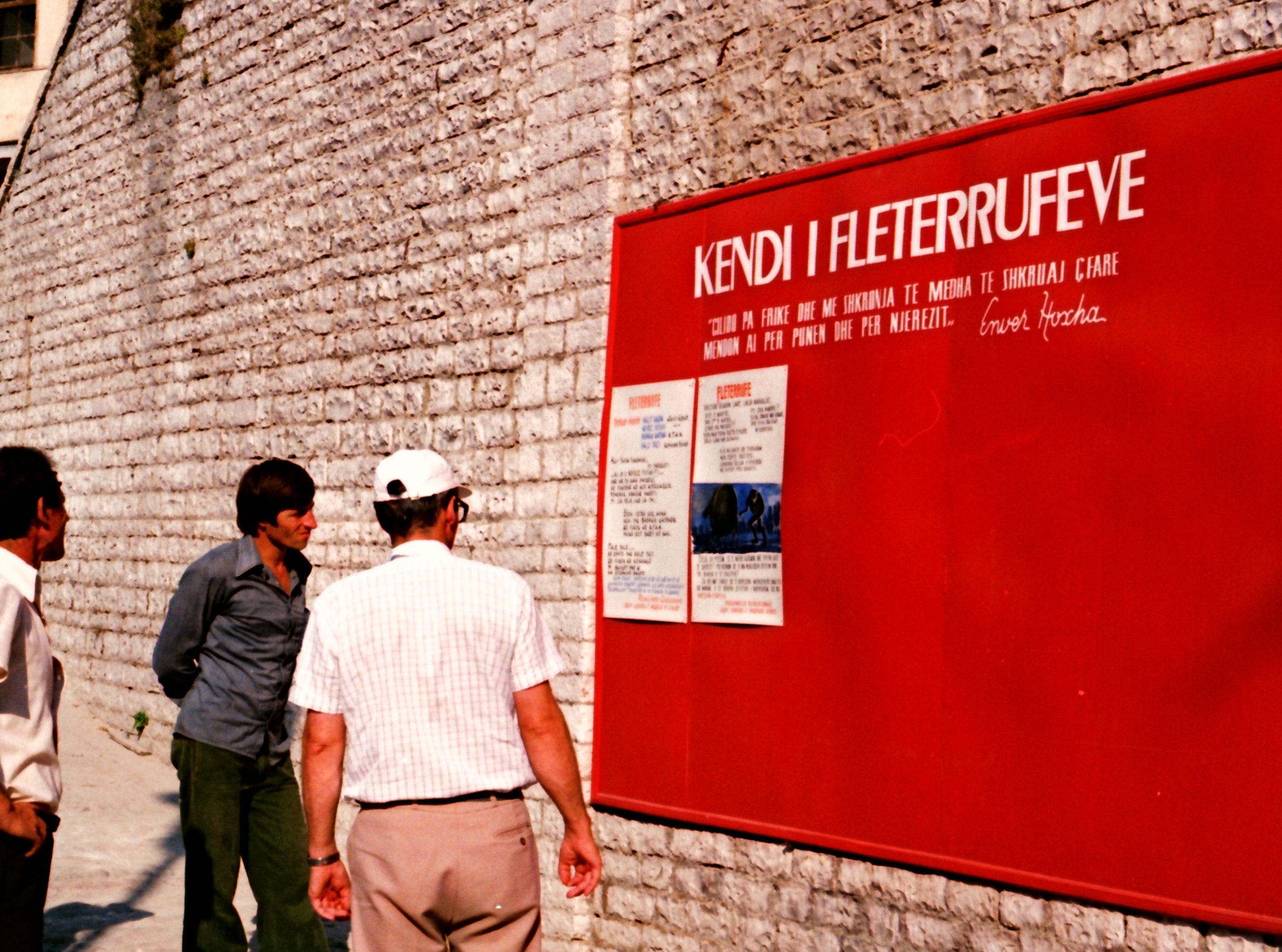
At the House of Leaves museum I read claims that a significant proportion of the population was entangled in repressive structures.
My country — with more than forty years of experience under dictatorship.
After 1991 several attempts were made to work through and open the secret-service documents, but the process became long and difficult, especially because many files had already been destroyed at the beginning of the 1990s.
Experts nevertheless estimated that around 140,000 secret-service files from the communist dictatorship still existed.
Only on 30 April 2015 did the Albanian Parliament adopt the law on “the right to information concerning the documents of the former State Security Service of the People’s Socialist Republic of Albania”.
That law was not the first attempt to bring greater transparency to the discussion about opening the files. (2)
Under the pretext of clearing archives of “useless” material, a large number of files were destroyed in February 1991, in the period surrounding the collapse of the regime and the toppling of Enver Hoxha’s statue in Tirana.
This extraordinary act of damnatio memoriae — a deliberate erasure of memory — affected the records of people persecuted for alleged acts against communist ideology, people who had escaped or attempted to escape abroad, as my brother Ilirjan did, or people officially accused of causing “damage” to socialist property.
Because so many Albanians were persecuted for such “offences”, it is clear what an irreversible loss the destruction of these records represented.
This process has been marked by a lack of transparency toward Albanian society.
There were also no clear rules about which kinds of files should be opened or how information should be collected and handled.
Then came the monumental question:
Who is to be “punished”?
Those who supplied information or those who received it?
Those who killed, or those who gave the orders?
A heavy burden — and an intentionally uncomfortable question.
The Sigurimi used excessive force to compel people to cooperate.
Torture was used by the system as a coercive tool, supported by written instructions from those responsible for policy during that period.
When I think about the Albanian secret-service files alongside the German model, I also keep in mind that many repressive measures in Albania do not appear to have been recorded by the secret service at all.
When whole families were interned in remote regions, for example, the decision was often implemented through ordinary administrative procedures without the secret service necessarily being formally involved.
As a rule, such official measures recorded only the “head of the household”, not every affected family member.
Our own family is an example:
weeks of interrogation, threats and beatings that were never officially recorded.
So the question is not merely what exists in a “Sigurimi file”, but also what happened outside the files — including informal instructions and conduct that left no documentary trace.
(2) Law no. 8043 of 30 November 1995, “On the Verification of the Figure of Officials and Other Persons Connected with the Protection of the Democratic State”, did not create a comprehensive constitutional procedure.
In 2006 Parliament adopted a resolution condemning crimes committed by the communist regime in Albania.
Two years later, on 22 December 2008, law no. 10034, “On the Integrity of Senior Officials of the Public Administration and Elected Persons”, was approved.
Two months later the Constitutional Court struck that law down.
_______________________________
In this context I am also attaching a text of mine published on 18 February 2017 by BalkanWeb:
“The Past in the Present and Today’s Camouflaged Totalitarianism”
I had just turned eighteen.
Before the killing of my brother Ilirjan Zari — shot at the border at the age of thirty on 3 February 1990 — I had never spent a moment of my life trying to understand the ways human beings think under totalitarian conditions.
I had never confronted myself with questions such as:
“What happens to the behaviour of an individual, a group or a class of people when they consciously exercise unlimited power over society?”
That rule did not merely define a person’s value.
It dictated the intimacy and thoughts of every individual across different areas of life.
Worse still, it could decide to make you disappear in the blink of an eye, overnight.
How absolute did such people feel when they calmly chose — after washing their hands in the basin of innocence and justifying their acts as “duty” — who would be the next friend and who the next enemy to be erased?
More concretely:
with what moral conscience did border-post commanders go to sleep after firing on civilians who tried to cross those “sacred” borders?
Leave aside for a moment the educational background or moral formation of the ordinary border soldiers, many of whom had only recently completed eight years of schooling.
What about the Sigurimi officers, investigators, judges, prosecutors, surveillance officers, punishers, police officers and inspectors of the institutions charged with maintaining order?
How defensible is it today to repeat the old slogan:
“We did what the authority and the law required of us”?
Was it really necessary for these people to choose those actions — extinguishing thousands of civilian lives through executions without trial at the border, like my brother, or in prisons through unjust proceedings contrary to international human-rights standards, through torture and then the persecution of the individuals and families left behind?
What personal benefit came to them from enforcing an inhumane law?
Or are we speaking about practical incentives?
Did those practices, carried out at the expense of human life, bring them personal advantage?
The facts show that individuals who served the old system were formed within the habits and assumptions of totalitarianism.
Yesterday someone was an agent or investigator; today that same person may be a lecturer in law or a judge in a high court.
This is more than “the irony of fate”.
It is a technique of what Hannah Arendt called the “banality of evil”: a structure through which habits learned in a totalitarian system can continue into new institutions.
Such conduct overturns the ethical demand associated with Kant’s categorical imperative:
act only according to principles that you could will to become universal law, and treat humanity — whether in your own person or in another — never merely as a means but always as an end.
The question therefore remains:
what is a person to do when the law itself is criminal?
And what did those people choose to do against communist crime and against the totalitarian system itself?
Hannah Arendt’s Eichmann in Jerusalem and its account of the banality of evil brings me back to the fact that in systems of this kind ordinary people often insist they had no way to resist, even when one possibility was simply not to participate.
Arendt helps me ask:
Why did ordinary people become involved in communist crimes?
Bureaucrats accepted the system, enjoyed the privileges of office, praised one another and congratulated one another whenever the decorations of the isolationist dictatorship shone on their jackets and uniforms.
They were shaped by the apparatus of totalitarian power and, in the process, morally deformed in systematic ways.
Obedience, action and behaviour turned into routine.
Yet beyond these disturbing conclusions there is something even more tragic.
It is tragic how our society — both in the past and TODAY — sidesteps this banality through manufactured wisdom and serves us the familiar medicine called “TIME”, as though time alone could heal wounds by injecting us with forgetting.
That is a modern form of evil.
Albania’s border with Yugoslavia was marked by 176 principal boundary pyramids and 1,254 intermediate ones, while the border with Greece had 177 principal markers.
My brother Ilir, together with my other brother Agim and a third person, became part of those who in February 1990 dared to reach for freedom.
Ilir, like many others during that year, lost his life near one of Albania’s border markers.
Whenever the killings at the border in 1990 are discussed or written about, whenever persecution and the horrors of communism are documented, I repeatedly see my brother’s photograph used to illustrate that brutality.
A life extinguished in the mud.
An investigator, a prosecutor and two soldiers with their hands in their pockets look at his corpse.
In February 2017, twenty-seven years later, among many documents, I saw that photograph for the first time, together with seven other photographs in the Criminalistics Service file, part of the criminal case brought against the surviving brother who was arrested on the night of the attempted escape.
I read the statements of the soldiers involved in the shooting.
One statement says:
“I am a first-year soldier. A. and I fired in his direction. When we hit him he fell and said, ‘Oh, you killed me.’ After I made sure that he was dead, I went to block the border so the other two could not cross.”
Trembling, I keep reading the investigator’s protocol from the Internal Affairs Branch of the Kolonjë district, stating that there was sufficient evidence for the criminal offence of “treason against the homeland”.
Another record, prepared by an investigator from the Ersekë branch and signed by a pensioner from the village of Starje, describes hearing a knock on the window, suspecting that the visitor might be one of the wanted persons, inviting him in, then calling the man’s son and later the village unit, which came and took Agim away.
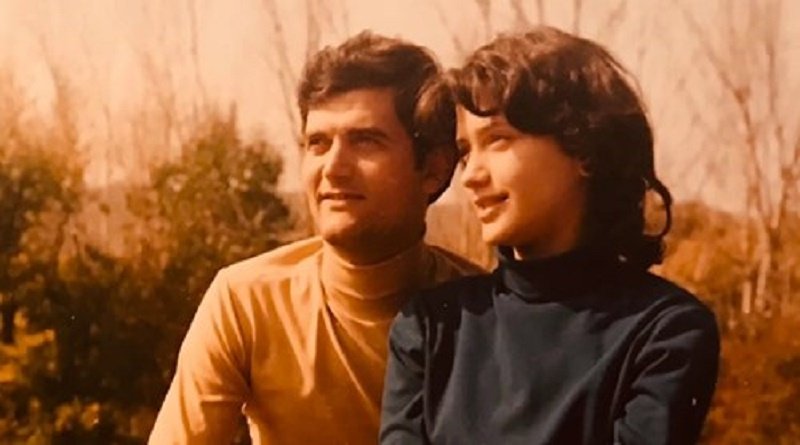
Ilirjan and me, Lake Park, Tirana, 1985.
I turn over in my hands the names of investigators, prosecutors and judges, the court decisions, the record of the search of our home.
The whole film returns:
they came and turned our entire house upside down.
Liri’s paintings, his poems, the library, the sofas, the cupboard containing bedding, even intimate personal belongings.
I remember the rubber truncheons on my back during questioning at the Internal Affairs Branch in Tirana.
The marks they left shattered my father’s spirit — as though the false news that both his sons had been killed at the border had not already been enough.
I gather the courage to read, for the first time, the forensic examination report describing the initial examination of Ilirjan Zari’s body and then the internal examination.
Can God give a sister enough strength to read her brother’s autopsy?
A torn diaphragm.
Destruction of the first and second ribs.
Complete destruction of the right lung.
Complete destruction of the fifth thoracic vertebra and severing of the spinal cord.
Cause of death:
acute haemorrhage and respiratory failure following a gunshot injury.
Several pages of detailed autopsy.
Routine — on paper.
But not an investigation driven by the desire to identify and hold accountable the person who fired without lawful justification.
And afterward, what happened to that body — the body for which life, love and the canvases of a future had still been waiting, canvases that would never receive the colours of his life?
No.
It does not end there.
No body, no grave, no protocol, no stone where our parents or we could kneel.
Only exhaustion: being sent from place to place, met with mockery and contempt.
“Come back in fifteen years. He was an enemy of the homeland. Don’t look for him.”
In Ilir’s bag were a pair of pliers, a screwdriver, some books and a camera.
That was the “enemy of the homeland”.
I owe my own freedom and my art to his courage as an artist full of dreams.
I return to the present.
I gather myself and ask:
What is today’s Zeitgeist in our understanding of a free society?
How are our laws confronting the consequences that dehumanized bureaucrats inflicted on an entire generation — a generation that took the roads of the world simply in order to be free?
In the first half of the 1990s, Albania held a series of almost theatrical court proceedings, soon nicknamed by ordinary people the “coffee trials”.
Several senior state officials from the period 1945–1991 were convicted of abuse of office, although prosecutors also attempted to address crimes against humanity and fundamental human rights.
Those still serving sentences in 1997 were released under the general amnesty of that year.
One person who had received a life sentence and benefited from the amnesty appealed, was acquitted and afterward lived in society cleared of legal wrongdoing.
We know Albanian justice has taken many turns.
But what about social justice?
Where was society?
Where were the people who had managed to remain human?
And, more troublingly, where are they now?
How capable is Albanian society today of demanding social justice?
Not only from the “big heads” of totalitarianism, but from the lesser soldiers, bureaucrats, links in the chain and cogs in the machinery.
Even when legal responsibility is difficult or impossible to establish after so many years, social accountability and historical reckoning are still possible.
The government of 1992–1996 drafted and implemented, to the degree it could, a special lustration law intended to bar from decision-making positions individuals shown to have served institutions of repression in Albania during 1945–1990.
A commission with a similar purpose operated after 1997 into the early 2000s, though its scope concerned people appointed to high government positions.
Despite repeated political noise, no lasting lustration framework was re-established. In 2012 the Constitutional Court declared a proposed law unconstitutional amid public arguments about conflicts of interest and institutional legitimacy.
By the time of this essay, Albania had established a specific Authority for Information on the Documents of the Former State Security Service.
Information — very good.
But what happens legally when a former collaborator is identified?
What happens when an investigator from decades earlier holds public office today?
The answer cannot be left to private conscience alone.
By accepting life with evil, and sometimes from evil, a substantial group of people were dehumanized by the totalitarian regime.
Today, regardless of their degree of involvement, such people may be integrated into Albanian or wider global society.
Can a society live normally and healthily if it never asks for reflection on direct crimes, participation in them or the failure to report them?
The dictatorship neither arrived nor remained in power alone.
It was brought and maintained not only by those who ruled but by those who served it.
The banality of evil, in this sense, has not vanished from among us.
© 2022 Eda Zari.
Reproduction in other media is prohibited. All rights reserved.
CONTINUE READING →