“You Don’t Talk to Communists!” 24 February 1991 — The Killing of Artan Lenja.
A family remembrance of Artan Lenja, killed in Tirana on 24 February 1991, and a reflection on memory, accountability and the unfinished work of confronting Albania’s communist dictatorship.
Our birthdays came one after the other.
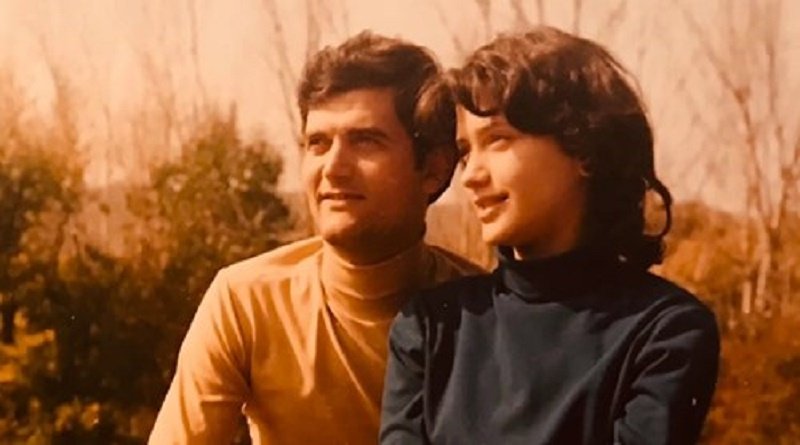
We celebrated 21 and 22 November 1989 at my home, everyone dancing with the lights off to “Ella, elle l’a” playing from a BASF Ferrochrome cassette. From the other end of the room Tani shouted, “Don’t you have any AC/DC?”
Artan, the son of my aunt Bukurie, had only just turned nineteen, while I had turned eighteen. As we danced happily, I complained to Matilda — Artan’s sister, my cousin and, to me, a sister as well — that we were “getting old”.
It was the last celebration that brought us all together.
When we lose someone dear in the family — when we lose a brother — a part of childhood dies with him. The bond of brother and sister no longer exists in the same way, because death ends physical, earthly coexistence. There are no more conversations, walks together, laughter on beaches, jokes, or tears shared before a film at the cinema. There will be no more birthdays with cheerful candles like that November of 1989. With death, the “pair” of brother and sister ends — forever.
I was already in Germany when, on 24 February 1991, the terrible news that Tani had been killed reached me by telephone.
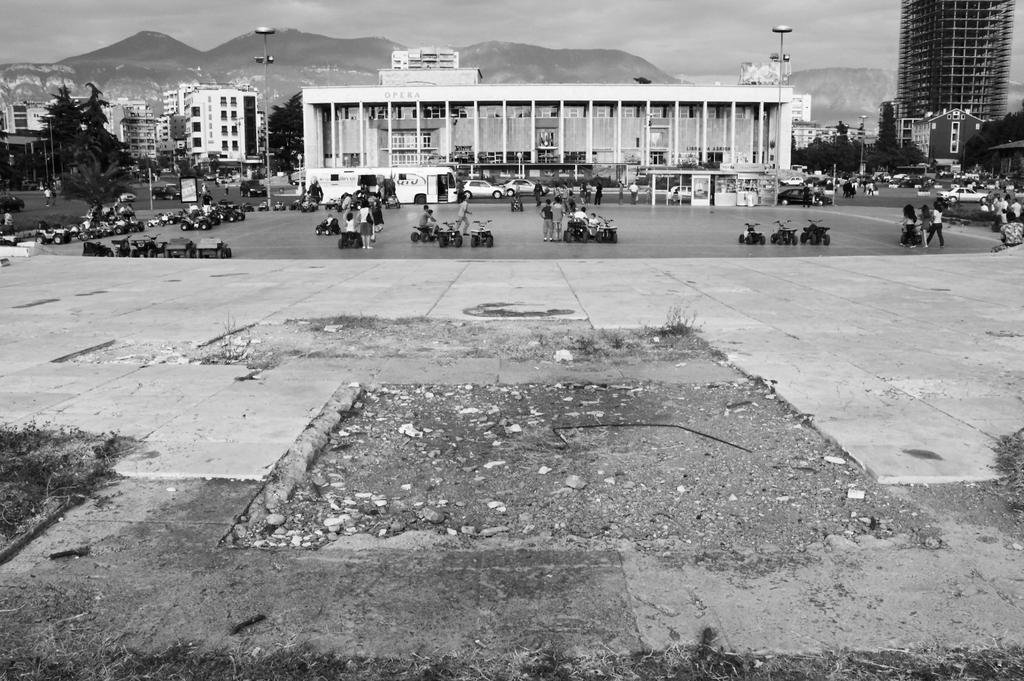
My aunt’s son, our brother, twenty-year-old Artan Lenja, was killed by a military patrol — not a police patrol — in the neighbourhood near the Partizani Sports Club in Tirana. It was the neighbourhood where Artan had spent his childhood and played with friends from the Naim Frashëri eight-year school. His father had taught him to ride a motorbike for the first time on that very street.
“Artan was doing his military service near KSP — Klubi Sportiv Partizani. He had earlier been declared champion in a wrestling category and, because of that, had been allowed to serve in Tirana.
It was a Sunday. On the morning of 24 February 1991, Tani washed at home at Mum’s and set off for the Partizani sports club, where he and the wrestling team were due to train for a friendly match with a Turkish team. He said goodbye, kissed Mum and me and walked out, never to return to that last kiss.
Those were troubled days — and especially troubled nights — in Tirana,” Matilda recalls.
“Three days earlier, on 20 February, in front of the National Museum, crowds of people — thousands of citizens and students — pulled down the statue of Enver Hoxha. Mum begged us not to leave the house because for two days there had been heavy fighting near our block, around the Skënderbeg Combined School, and we could not understand who was fighting whom. I know that many boys from the neighbourhood threw stones at tanks approaching the apartment blocks.
On the evening of 24 February our uncle brought us the news that Tani had been wounded. Horror, screams and lamentation broke from our parents and from me. I remember Mum as if it were today, asking our uncle, ‘Tell me the truth — have they killed him? Oh, they have killed him, because a bullet does not forgive.’
Neighbours from our old area had witnessed what happened, so the news spread immediately.
Later, during the trial, testimony from several neighbours helped us understand how events had unfolded.
Artan had left training and was going toward Rruga Ndre Mjeda to take the bus home. A patrol had seized a boy from the neighbourhood and was dragging him down the stairs of an apartment building. The boy called to Tani, who happened to be passing, asking him for help.
Tani, who was not wearing a uniform that day because he had been training, turned back and told the patrol to leave the boy alone because he was an orphan living with his grandmother.
When the officer commanding the patrol saw Artan, he turned and said, ‘This is him.’
They immediately aimed a weapon at Artan and ordered him into a BÇ-type vehicle to be taken to the police station.
Tani replied, ‘I have no reason to go to the station. I haven’t done anything wrong.’
At that moment the other three soldiers pointed their automatic weapons at him. According to the family’s account and later testimony, patrol officer Mikail Themollari gave the order to open fire, raising his pistol and firing into the air, while soldier Ludovik Vata fired into Artan’s body.
Artan’s last words were: ‘Why did you kill me? I did nothing.’
At the trial it was said that a woman who saw what happened began shouting, ‘What have you done? Why did you kill him?’ We later learned that she was not accepted as a witness in the trial.
Other witnesses said the patrol hurriedly put the young boy and Tani’s lifeless body into the vehicle, leaving his legs outside, and drove toward the former NISH Tulla facility. According to the family’s account, the boy was taken to the police station, where authorities tried to attribute the killing to him.
A police employee reportedly followed the vehicle by bicycle. Unable to conceal the incident, the patrol left Artan’s body in the courtyard of the Military Hospital.
The place where he was shot was covered in blood. A soldier’s cap remained there, apparently left behind in the haste after the shooting.
Later a group of Artan’s friends surrounded the spot with flowers and candles. They placed his photograph there and a sign reading in large letters: ‘Killed by the PPSH.’”
In a 2011 interview, Matilda recalled the proceedings concerning Artan’s killing.
“Around a year later, a hearing took place at the Tirana court. The investigation had been led by chief investigator Petrit Serjani and investigator Luan Berja. The prosecutor was Petrit Bici and the judge Petrit Klosi.
Officer Mikail Themollari arrived at court as a free man and armed. He was accompanied by soldier Ludovik Vata, who assumed responsibility for the shooting. Former Security Battalion commander Çelo Boro appeared as a witness.
At our request, and through the representation of our lawyer Fatbardha Selenica-Kalakula, the officer was disarmed.”
The family recalls testimony in which the officer said the patrol had been ordered to maintain order and show that the state would not retreat before what authorities called “destructive forces”.
When the family’s lawyer asked who had issued the order, the answer given was Kiço Mustaqi. The lawyer then questioned how such an order had been transmitted, given that Mustaqi was no longer de jure Defence Minister. According to the testimony quoted by the family, the instruction had not been written and had been accompanied by film cassettes showing participants in the events of 20 and 22 February.
The family says many eyewitnesses were not heard in court and that disturbing evidence from witnesses and autopsy doctors described injuries to Artan’s body beyond the gunshot itself.
It seemed as though the tragedy of our family were branching into endless paths.
While one part of our family wandered through the mountains of Ersekë and Borovë searching for the body of my brother Ilirjan Zari — killed at the border on 3 February 1990 — my father, at Sharrë Cemetery on 25 February 1991, held his sister as she laid the body of her twenty-year-old son into his final resting place.
As if fate had not exhausted its irony, one year and six months later, in the summer of 1991, Ilir’s body was found. He was exhumed from the uplands of Ersekë and reburied only a few plots away from Artan.
The names of those killed during the unrest from February to May 1991 came to be remembered as a list of martyrs, among them Pëllumb Tahiri, Artan Lenja, Artur Daka, Ismail Capari, Spartak Deliu, Mikel Laro and Lulzim Barxha.
The labour of memory strengthens historical consciousness.
Memories of this kind can have a political and moral mobilizing effect.
I am grateful for this labour of memory, which carries historical experience forward.
Long live the memory that represents and touches the central questions of a past that is still present among us.
But how do we speak about the past, and should there be limits on what must necessarily be said?
Why do we raise petitions seeking special legislation intended to prohibit the glorification of the former communist regime?
I read a petition calling on lawmakers to prohibit political parties from praising the former communist dictatorship or its rhetoric, to ban public use of symbols of the former regime, to vet political officials and heads of state institutions for ties to that regime, and to disclose the criminal activities of the former State Security Service and other institutions.
But the crimes of communism, the clarification of the files, the persecution of thousands of people, killings, internments, imprisonment and torture are not a private matter for a small group with individual interests.
They are a matter of national memory and a moral obligation of both state and society toward the pain of a nation whose past remains unresolved.
I take it as self-evident that justice should be pursued insistently at a national level.
At the same time, such petitions also raise questions for me about democratic representation and how citizens participate in legislation. And yet, somehow, we have to go on.
European institutions and scholarship have repeatedly documented mass death and repression under totalitarian communist regimes, including executions, deaths in camps, deportation and famine.
At the time of writing, the Parliamentary Assembly of the Council of Europe was expected to discuss a resolution condemning crimes committed under communism.
“You don’t talk to communists!”
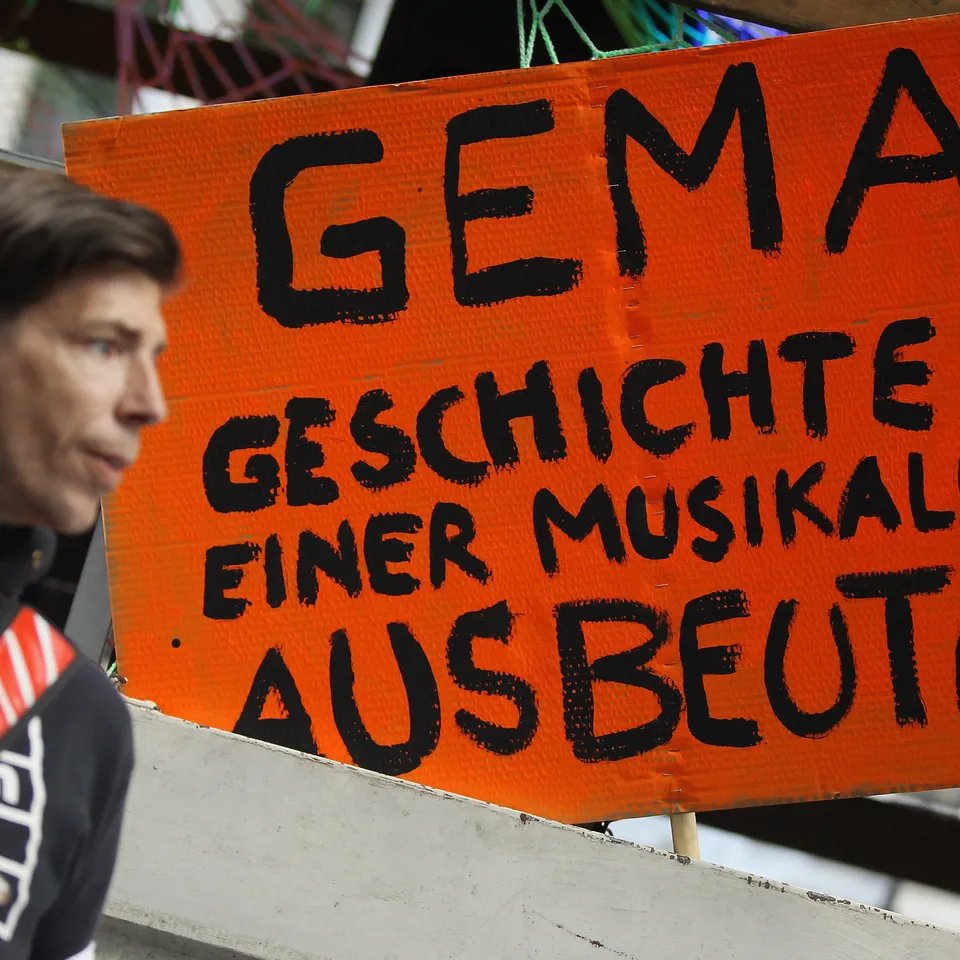
Several years ago, artist colleagues in Prague held a protest concert against renewed communist political influence in the Czech Republic. They acted with collective courage and solidarity to defend freedoms won with difficulty.
I return to our own wounds.
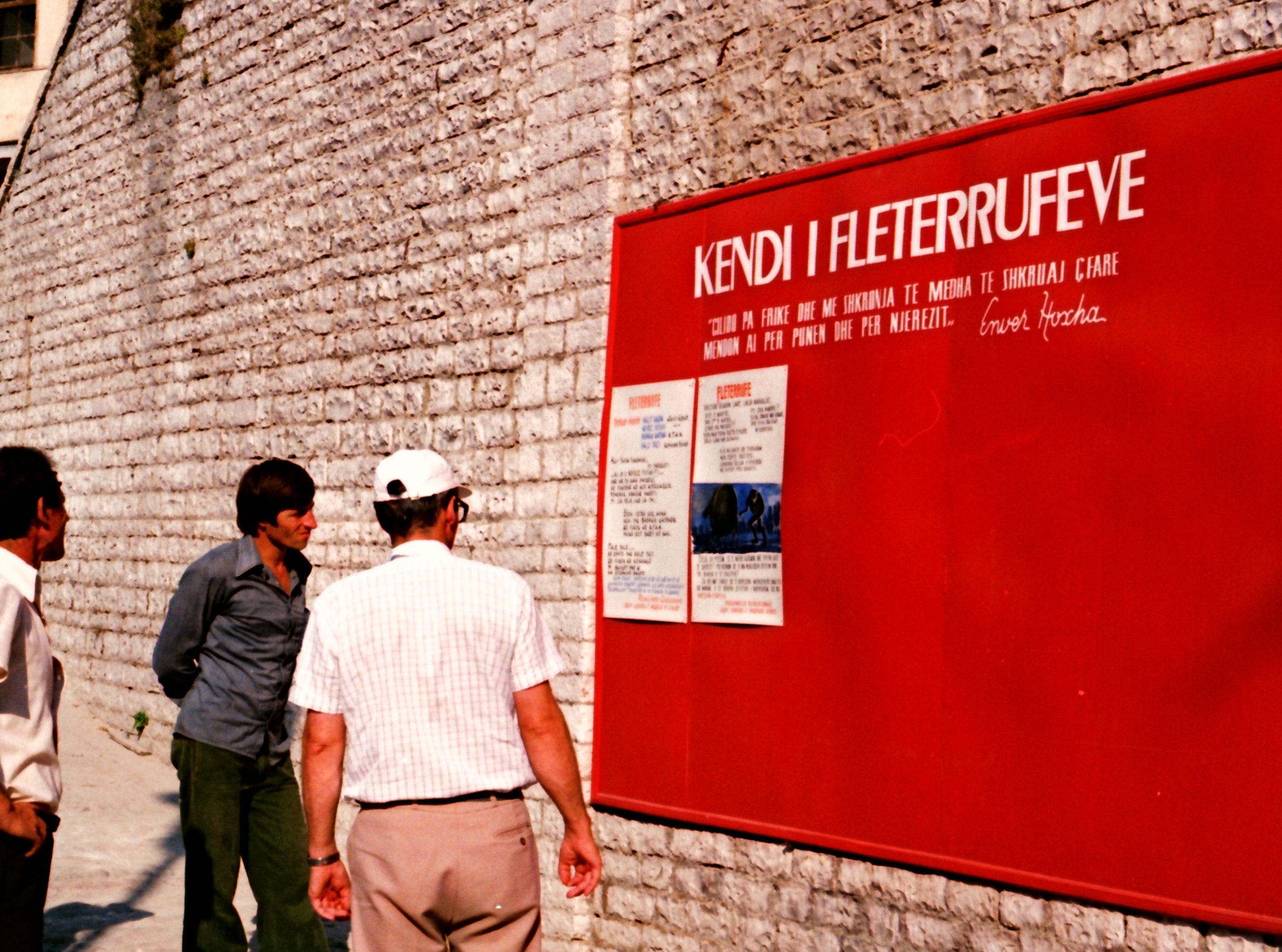
Albanian society carries a past full of injuries from communism. Matilda, the families of Pëllumb, Spartak, Lulzim, Mikel, Ismail and Artur, my own family and thousands of others carry the experience of persecution as wounds that remain open.
“As relatives we repeatedly asked for the case to be clarified, but nothing happened,” Matilda says. “It is unbelievable, but true: the case was never reopened. Mum closed her eyes for the last time still counting how old Artan would have been.”
As an artist I rejoice in theatre and music. I like travelling freely.
Equally important is the fact that the generation of witnesses — those who remember — is saying goodbye to us.
Opening the files and documents of the Sigurimi would therefore be, for me, a powerful act of reckoning with persecution and the crimes of the dictatorship.
Justice delayed is justice denied.
© 2022 Eda Zari. All rights reserved.
CONTINUE READING →