I Believe Breastfeeding Is One of Nature’s Most Beautiful Masterplans
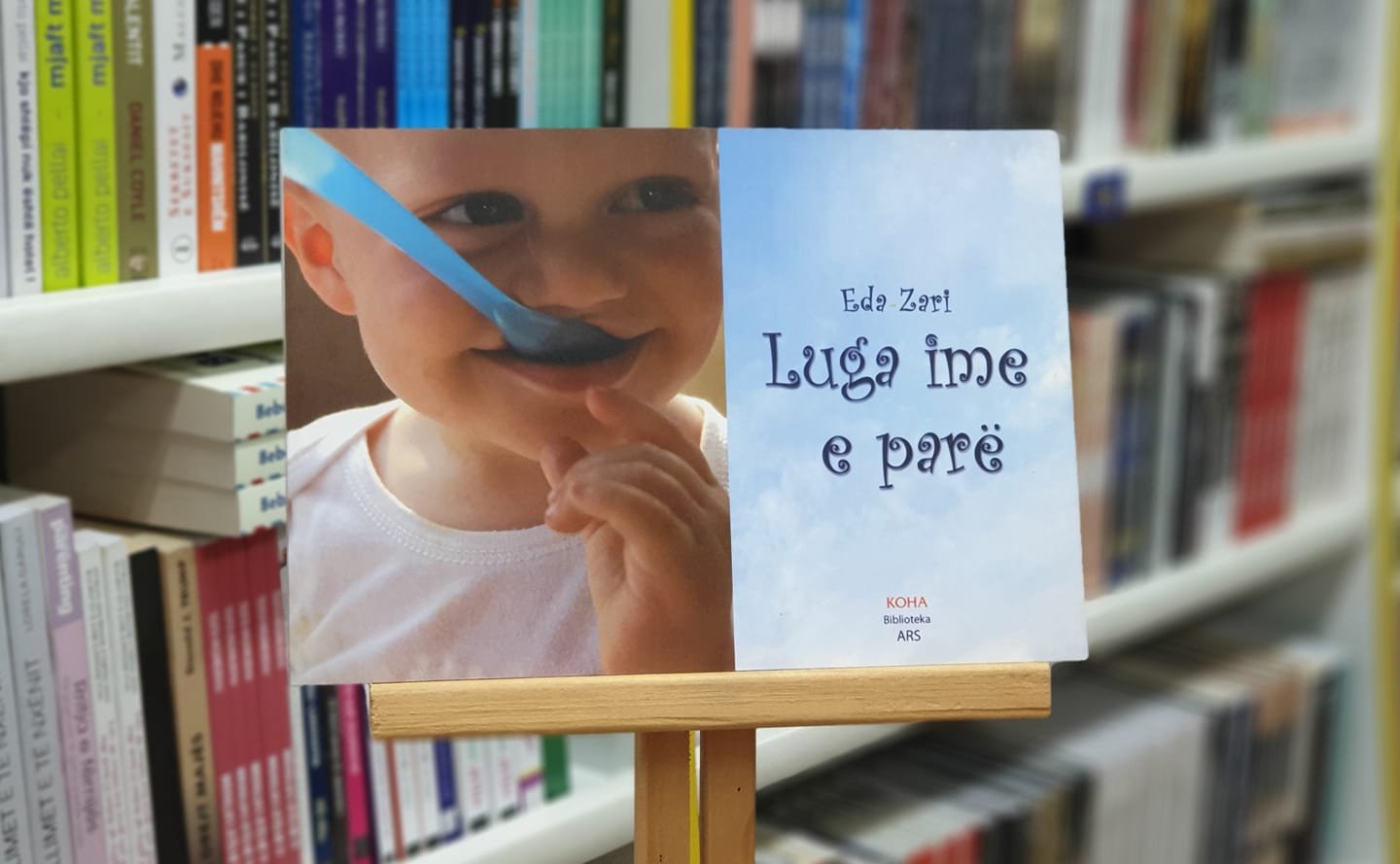
In an interview with Gazeta Si about her book My First Spoon, Eda Zari discusses breastfeeding, first foods, homemade cooking, motherhood, career, photography and the importance of feeding a child without guilt or rigid dogma.
Eda Zari — interview with Gazeta “Si” about the book My First Spoon, conducted in August 2018 by Suadela Balliu.
— How did this book come about, and how long had you been thinking of bringing the recipes you used to feed your son to other young mothers as well?
Eda Zari: To begin with, the little book My First Spoon is now in its ninth year, while my son David is already in his tenth.
The fact that the book is still in circulation shows how necessary this kind of information can be, especially when it comes from personal experience.
I created part of the book during David’s first fifteen months, while I was introducing food by spoon but still breastfeeding him as well.
Before and after attending a Mother and Baby course, without any precise publishing plan, I began writing things down and updating them almost like a diary: what was happening between me and the baby, how feeding changed, what worked and what did not.
Later, Dr Osterhus helped illuminate the idea of turning those notes into a small book, a physician at the Frauenklinik of the University Hospital Düsseldorf and, at the time, also head of the Düsseldorf Midwives’ Council.
— David is your second child. Didn’t you prepare these recipes for your first son?
Eda Zari: There are thirteen years between David and his brother.
During the period I have just described, it came naturally to me to compare the two experiences, especially when I focused on breastfeeding.
That is why I chose to give the recipes for the first stage of spoon-feeding a secondary place in the book.
I devoted much more space to the nutritional importance of breast milk, breastfeeding itself, the positioning of the baby at the breast, the mother’s own nutrition while breastfeeding and similar questions.
Allow me to move slightly away from your question because I want to touch on some of the values carried by a mother’s milk.
It is, I would say, an ideal food — almost divine, I would say.
Breast milk protects a baby against many infections, allergies and other external factors and supports the development of the immune system.
The breast also offers a constant temperature suited to the softness and sensitivity of a baby’s mouth.
Beyond everything else, breastfeeding creates a strong bond between child and mother.
The baby begins to recognize and be drawn toward the mother’s voice, touch, body scent and the familiar scent of the breast.
The importance of this bond for a child’s mental and physical health has, in my view, still not received the recognition it deserves in modern culture.
Unfortunately, breastfeeding culture remains undervalued even in contemporary society.
During my consultations with Dr Osterhus, I learned that professionals had long recognized its importance and the need to promote a practice that supports the emotional and social connection between mother and child — a connection whose effects continue into later life.
It is still not unusual for a mother breastfeeding her baby comfortably in a spring park, or while travelling by train, to encounter people who feel offended by the “scene”.
I am inclined to believe that in modern consumer society the projection of a supposed “eroticism” onto breastfeeding has reached a strange level.
Is breastfeeding somehow unacceptable because breasts are thought to be “reserved” for men?
At the same time, studies and clinical experience have long shown the value of contact, warmth and secure attachment for infants.
Personally, I think of breastfeeding through a line from Friedrich Schiller’s Ode to Joy, An die Freude, written in 1785 and later made famous through Beethoven’s Ninth Symphony:
“Freude trinken alle Wesen An den Brüsten der Natur!”
“All beings drink joy at Nature’s breasts!”
I believe breastfeeding is one of the most beautiful masterplans nature has devised, perfected in the body of a woman, whose breast is not merely an ornament but a source of life.
That is how the subtitle From the Mother’s Breast to the Spoon became a purpose in itself.
At the same time I want to make something very clear: it is not a “sin” if a mother, for health reasons or personal reasons, decides or needs to choose another alternative — a bottle, infant formula or another appropriate feeding method.
Any effective alternative that fulfils the fundamental purpose of protecting and supporting the child’s health is welcome.
— The recipes come partly from your grandmother and relatives from southern Albania, while your son was born in Germany. What was it like feeding a baby with recipes from so far away, especially in Western countries where fast and intense lifestyles often lead families toward ready-made or semi-prepared baby food? Did the people around you notice the way you fed him?
Eda Zari: My immediate answer would be this: my pots in Germany receive, alongside boiled potatoes and every kind of cabbage, the privilege of cooking trahana, pashaqofte, dishes from my childhood and even paluze for David.
This curious mingling of cooking traditions is good not only for children but for adults as well.
The question is: why is food prepared by your own hands so often more satisfying?
One of my mother’s aunts — one of those exceptional women from Përmet who, besides cooking, spent her days gathering mallow, chamomile and jujubes — had a motto whenever food was concerned:
“When your heart wants a dish, your hand makes it. When your own hand makes it, your eye wants it. And if your eye wants it, your mouth will eat it too, my girl.”
Today we are constantly offered ready-made foods for children, beautifully and professionally packaged, marketed attractively and presented as practical solutions.
Often, and not without reason, we become sceptical about their real nutritional quality.
The food industry has become highly commercialized and promotes an entire logic of convenience: saving preparation time, offering semi-ready products, promising necessary minerals and vitamins and so on.
You may say: fine — so where is the problem?
My intention was, and remains, to keep a certain distance from excessive reliance on these products and to offer my child, as often as possible, food prepared by my own hands and in my own kitchen.
I carried with me recipes and memories from my own upbringing, influenced by my mother, relatives and my brother’s wife — a very wise woman originally from Kamenica in Korça.
From daily practice I can say that the time and effort needed to prepare fresh food for a child are often far less than people imagine.
At the beginning, you do not need many ingredients to make a soup or puree for a baby.
Seasonal vegetables can provide valuable vitamins and are usually easy to digest.
The first months of complementary feeding can become a period in which parents build experience in preparing healthy food not only for the child, but also for themselves and the whole family.
What one learns in those years remains.
— I do not doubt that these are healthy recipes, but are they also pleasant for the palate of children who are still unfamiliar with new tastes? How did you make the food attractive to the eye and enjoyable to eat? What was David’s favourite?
Eda Zari: One of the first foods I remember using — and I would not claim it belongs specifically to the south or to one particular region — was paluze made with rice flour, prepared with fruit or vegetables.
At first I fed David little by little, without forcing him, giving him enough time to understand the new tastes and textures in his mouth.
It was an unusual process for him until he learned to love his blue spoon and his own plate, decorated with ducks or balloons, filled with puree or strawberry paluze.
So I did not hesitate to use plates or spoons decorated with zebras or giraffes.
These playful elements became part of the practical idea behind My First Spoon.
Gradually I increased the consistency of the food once he had learned to eat and chew well.
Preparing food, making it tasty, varied and visually inviting became a shared game.
I photographed David covered in puree — one of his favourites — and made a ceremony out of serving what I had cooked.
— With all your professional commitments, how did you find the time to be a full-time mother, even collecting original recipes to feed your son well? Is it an outdated stereotype that career mothers have no time for their families and sacrifice family life for their profession?
Eda Zari: Where there is a will, there is a way. Nothing extraordinary about that.
I do not claim to have collected an endless number of recipes, nor did I undertake some grand research expedition to find them.
After David was born, I consciously reduced tours, concerts and long-distance travel during his first three years.
Everyone can make decisions concerning private life and, at times, decline professional commitments.
At every stage of my life, my children have come before everything else.
And yes, the stereotype is outdated.
It is equally misleading to describe maternal dedication automatically as “sacrifice”, while fathers are asked this question far less often.
Is a father’s dedication not also a sacrifice?
Our personal life choices — whether they involve sacrifice, profession or career — should not be hung around our own necks or our children’s necks as bags of guilt.
We do not bring children into the world so that they will owe us for our “sacrifices”, our love or our parental care.
Parental love is a noble vocation — one that needs no egomania.
— You also made the photographs in the book and photographed the dishes. Is this a book in which your dedication as a mother is joined by your interest in cooking and photography?
Eda Zari: Yes, it can certainly be seen that way.
For a small book of this nature, I thought readers would sometimes trust the photographs even more than the recipes.
A photograph of a plate of soup, or a clear visual presentation of a recipe, can reveal the promise of a new taste.
I am not a professional photographer and I do not claim the merits of that profession.
For me, the art of cooking has to do with the ceremony of eating and with cooking for the people I care for and love — although not only for them.
Those who have had the opportunity to eat food made by me know how much attention I give to cooking.
— Where can interested readers find the book, and do you plan to develop this passion or dimension of your work further?
Eda Zari: My First Spoon is available through Koha Ditore publications in Kosovo, at Dukagjini Bookstore in Prishtina, in North Macedonia and online under the same title.
I continue to cultivate my interest in photography — sharing photographs on Instagram and sometimes making small exhibitions or photo books for friends from places, events and people close to my heart.
But music remains my trusted island.
Whenever I create music, it reflects where I am mentally and emotionally.
© 2020 Eda Zari. All rights reserved. Interview published by Gazeta “Si”, August 2018.
CONTINUE READING →