Our Musical Memory and Umberto Eco — Eda Zari
A personal essay on musical memory inspired by Umberto Eco’s The Mysterious Flame of Queen Loana, moving through childhood television, film music, Henry Mancini, folklore, Nietzsche and the strange power of remembered sound.
How do we answer Umberto Eco when he unsettles us with the question: “What does musical memory do to us?”
“Within music, God left human beings the memories of the lost paradise.” — Hildegard von Bingen
It is enough to hear only a few sounds, a few tones, two bars of melody — and immediately we find ourselves travelling into the saudade [1] of our own past.
But why is music, in particular, the thing that reawakens our memories most powerfully?
In 2004 Umberto Eco published the novel The Mysterious Flame of Queen Loana. It tells the story of an antiquarian bookseller who has lost his memory after suffering a stroke.
Yet in the ticking mechanism of Giambattista Bodoni’s memory — that is the name of the protagonist — there is a curious catch.
Although he retains literary knowledge with inexplicable precision — poems, verses, book titles, their contents, dates and facts — he no longer recognizes his wife or daughters. Nothing from childhood returns to him. He cannot even remember his own name.
His memory also abandons him where emotion is concerned: feelings, states of mind, moral intuition, empathy, enthusiasm and hesitation.
In this situation, his wife — hoping to restore her husband’s memory — convinces him to return to his birthplace, to his grandfather’s house, where he used to spend summer holidays as a child.
During his stay at the finca [2], among the hills between Turin and Milan, Bodoni tries to reconstruct himself by searching for every trace that might connect him with all the things he can no longer remember: school activities, adolescent diaries, drawings, comics [3], sketches, the fascist party hymn Giovinezza — which they used to sing at school as the flag was raised during morning assembly, its original version containing the cry “Glory to the Duce” — and the list goes on.
Speaking of lists...
The architecture of lists is one of Umberto Eco’s specialities — and my admiration for his endless catalogues is no secret. In this novel he devotes an entire chapter to describing musical objects and the space in which memory is supposed to be rebuilt.
The place — Eco never relinquishes his allegorical instinct — is a spacious attic in which innumerable objects from childhood and early youth have been preserved, including the final two years of the Second World War.
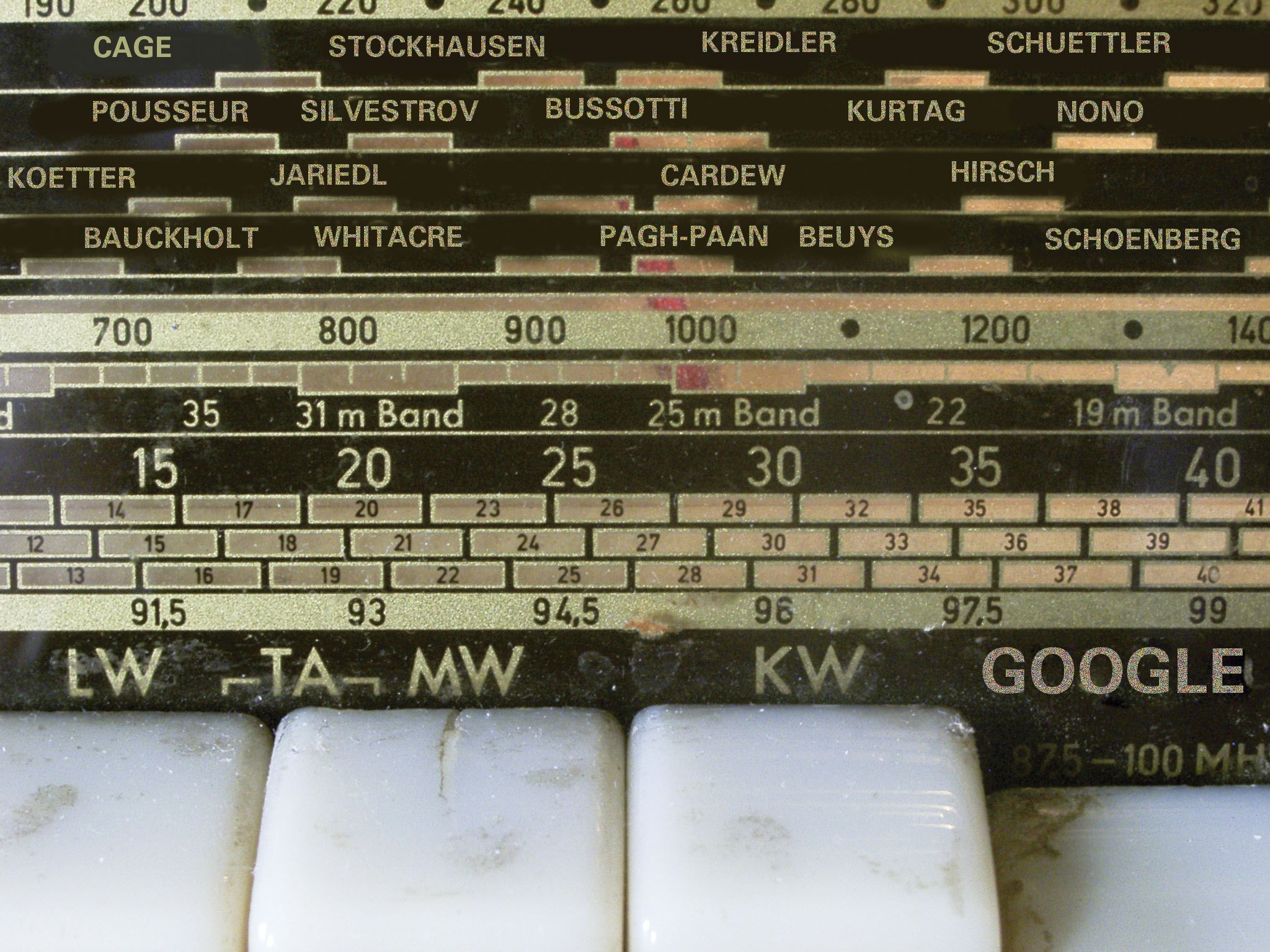
Under the roof, Bodoni finds radio catalogues, radios, equipment, posters of artists and some of the best-known recordings from the final war years and the early post-war period — music his grandfather loved and that they had listened to together in the evenings.
It is here that Bodoni rediscovers Glenn Miller’s Moonlight Serenade, music that accompanied the rumbling of American tanks through northern Italy; albums of fascist songs; the partisan song Bella Ciao; As Time Goes By — a song that even people with almost no musical ear or memory associate with Ingrid Bergman and Humphrey Bogart in Casablanca — and the foxtrot [4] Mille lire al mese.
Of course, among this abundance there must also have been magazines and more provocative literature from the period. But those are less important here, because we should remember that the L’Éducation sentimentale [5] of the boy he once was, and of his entire generation, unfolded against the background of Catholic education and the feeling of guilt.
Eco’s hero — an autobiographical double, whom I myself have nicknamed “Eco-Bodoni” — has to lose his memory in order to rediscover the world of a cherished time: first love, the music of childhood and, not least, a subtle meditation on human consciousness.
Within the limits of Bodoni’s damaged memory and his almost archaeological search, Eco creates an abundance of surprises and pleasures through descriptions of music and gramophone records — albums on which legendary labels gleam: Odeon, Columbia, RCA Victor, Parlophon, Decca, Disco Grammofono and others.
Personally, I would reread the book as a love letter to biographical literature, or as a cultural-musical excavation of the 1940s.
Yet when I think again of that chapter of endless lists — artists, songs, music — I am tempted to construct a fragment of my own musical memory, in order to come closer to both the disturbance and intoxication produced in me by Eco’s question, and by the intensity of the subject itself.
My heart tells me that musical memory is a generous institution — a host that never stops pouring.
It even seems to grow more generous with age.
For many people, musical memories reach deeper than the traces left by books, films or photographs.
Words and photographs describe something outside themselves.
Tones, by contrast, reveal themselves as sound.
Remembered tones are abstract, like dreams: untouchable, yet capable of enormous intensity.
That is why they can take shape inside us while simultaneously unfolding vividly before the mind’s eye.
Anyone who “broke” the rules of the Albanian Party of Labour and secretly watched Yugoslav television in the early 1980s — among other things to see Crtani film [6], animated programmes, by methods well known to those who lived through that time — could hardly have escaped seeing The Pink Panther [7] and hearing its instrumental theme: a kind of detective jazz played on tenor saxophone.
“Padum — Padum...!”
Out of a cloud full of stardust appeared the aristocratic Panther, carrying a long cigarette holder from which stylized smoke curled.
Naturally, our black-and-white Iliria television set served up the picture almost on credit, so to speak, making even the TV magazine look elitist — almost like Hannah Arendt’s 1964 televised interview with Günter Gaus.
At the time, I did not know who Henry Mancini or Plas Johnson [8] were.
But I knew Roza, a Greek-speaking neighbour, a doctor of the exact sciences who lived one floor above me.
To me, at twelve years old, Roza was the most beautiful woman at 21 Dhjetori in Tirana.
Her lips were full and rose-coloured, like her name; her skin was the colour of wheat; her legs in high heels were a poem by Sappho; her hair fell like black satin, parted in two over her chest.
When she greeted someone, the words did not come out lazily, but she naturally spoke in “slow motion”.
She resembled the kind of woman Chekhov describes in The Lady with the Dog.
The Pink Panther had nothing to do with Roza, of course. Yet whenever I encountered that woman, the way she walked immediately prepared the most alarming TTS — tritone substitution [9] — in my mind.
The Pink Panther theme matched her steps perfectly, as if it had been cut especially for her.
Even today, whenever I hear The Pink Panther, Roza springs into view automatically — the most graceful high heels ever to climb the stairs of our building, complete with an academic title; the feminine model of my girlhood.
Many events, places, people and feelings from my childhood, and part of my adolescence, are accompanied in memory by the music of Ennio Morricone and Henry Mancini.
Mancini and his repertoire belong in the pantheon of celebrated composers, distinguished by an unusually sparkling musical vocabulary: from swing and jazz to film music.
I think of famous film soundtracks and jazz standards such as Feelings and Love Story — songs performed in the tavern at Hotel Dajti, where my uncle played guitar in the band.
I heard the same songs, beyond the pogonishte dances, at the festive evenings of 28–29 November at SHQUP [10], where we were invited because of my father’s merits as a distinguished tank driver and recovery-vehicle operator — though he had been demoted to non-commissioned officer.
And Moon River — they played that often, conveniently presenting it as a waltz.
It is not by chance that I use Mancini’s music as an example.
I would never diminish it by christening it “memory music”.
His repertoire simply attracts me at the moment.
I want to stress that memory does not necessarily consist in reconstructing the past.
It comes alive only when it establishes a relationship with the present, and everything depends on how we renew our memory — particularly when viewed from the position of a musician.
Friedrich Nietzsche does not hold back when, in 1872 — influenced by Eduard Hanslick’s [11] book Vom Musikalisch-Schönen, On the Musically Beautiful, a contribution to the aesthetics of music and tonal art — he criticizes Wagner, who had composed a work drawing in part on elements of romantic memory.
According to Hanslick and Nietzsche, however, that memory had been restored so badly that it was not even worthwhile as parody:
“What remains of music now is discomfort or musical reminiscence — otherwise music has become merely a stimulant for dulled and tired nerves, or simply a painter of tones.”
The philosopher could not have imagined that the best-known musical works of his fifty-odd years of life — including the great “hits” of classical music — would later paint our memory endlessly through their circulation across digital networks.
Still, Nietzsche is right about the relationship between musical memory and aesthetics.
Music can be designed as a systematic mechanism for reminding us of the past — even if, aesthetically, it can sometimes resemble a standardized overlay of emotional imagery — and may either intoxicate us with sentimental rum or force upon us new aesthetic shortness of breath.
Yet I notice that musical memory absorbs traditional music more strongly than classical music — or, let us call it, more sophisticated music.
There is a reason for this, one that should perhaps be stated carefully but that matters to any discussion of musical memory.
Folklore is a mixture that gathers and fuses all styles: club jazz, bucolic flutes, salon violin, Mozartian harpsichord, Renaissance madrigals, war drums, cradle lullabies — all into a single wealth of living memory.
In other words, traditional music is musical memory’s promise to the wider public.
In my own relationship with musical memory, as an artist I tend and aim to obtain — beyond nostalgia and the melancholy that music can grant — an aesthetic communicative experience between the past of my musical memory and the present.
It would be trivial if our store of cultural-musical memory were muddied by professional sloppiness and tonal-aesthetic carelessness.
As the saying goes, at the end a person returns to the beginning.
Eco died in February 2016.
Two of his friends, accordionist Gianni Coscia — with whom Eco had gone to school in Piedmont — and clarinettist Gianluigi Trovesi, made an album that is not simply an excavation intended to bring back a lost childhood friend.
Their songs form a musical appendix to Eco’s novel The Mysterious Flame of Queen Loana.
The album was released by ECM Records in June 2019.
And, to place a final golden lid on the subject, I quote Umberto once more:
“There is no memory unless there is forgetting at the same time.”
Düsseldorf, 27 June 2020 Published in Peizazhe të Fjalës, 27 June 2020
© 2020 Eda Zari. All rights reserved.
Notes
[1] The Galician-Portuguese concept of saudade can be translated approximately as yearning, melancholy, or a desire to wander back into a happy — often beloved — past.
[2] Finca refers to a villa within a rural property, usually surrounded by land and amenities: often a swimming pool, orchards, farmland and nearby hills, generally away from the city.
[3] Comics refers to a sequence of images or graphic panels. Comic books and their characters are typically combined with text in speech balloons and onomatopoeic forms such as “bam” or “boom”. I do not think it is far-fetched to say that this literature helped lead Eco toward semiotics.
[4] The foxtrot is a romantic partner dance combining travelling and feather-like steps. It was practised in ballroom culture in the 1920s and often played by big bands in 4/4 time at roughly 120–136 beats per minute.
[5] L’Éducation sentimentale — Sentimental Education — is Gustave Flaubert’s much-discussed 1869 novel about emotional education and the disillusionment of an entire generation.
[6] Animated cartoons with abundant musical noise and words, often structured around onomatopoeic effects.
[7] The Pink Panther cartoon character was created by Friz Freleng — one of the creators associated with Looney Tunes figures such as Bugs Bunny, Speedy Gonzales and Tweety Bird — and David DePatie.
[8] Plas Johnson is an American saxophonist and multi-instrumentalist on wind instruments, including tenor and baritone saxophone, clarinet and several flutes. Beyond his legendary performance on The Pink Panther theme, he is known in jazz-soul and hard-bop circles for his instrumental contributions.
[9] Tritone substitution — a technical term that is easier to understand than it sounds — offers a broad range of possibilities for tonal “emotional design” within a phrase or melody by extending the harmonic possibilities of standard cadences. For example, a G7♭5 chord may be replaced with C♯7♭5.
[10] In Tirana in the 1930s there was the Officers’ House — later the Writers’ and Artists’ League in the 1970s–1990s, and later still used by the Ministry of Culture. A more “representative” institution was subsequently built for the military: SHQUP, the Central House of the People’s Army, later used as the headquarters of the Democratic Party.
[11] Eduard Hanslick was a pioneering contributor to the rethinking of aesthetics and musical art in 1854. He has been remembered not only as one of the sharpest critics of art; he is also known as the aesthetician who dared to criticize Richard Wagner — who retaliated through the figure of Beckmesser in Die Meistersinger — and who contributed to reforms in German theatre and opera academies. His writings remain central to the study of musical aesthetics. I also confess a personal sympathy: Hanslick preferred the music of Johannes Brahms and opposed Anton Bruckner, especially his symphonies.
CONTINUE READING →