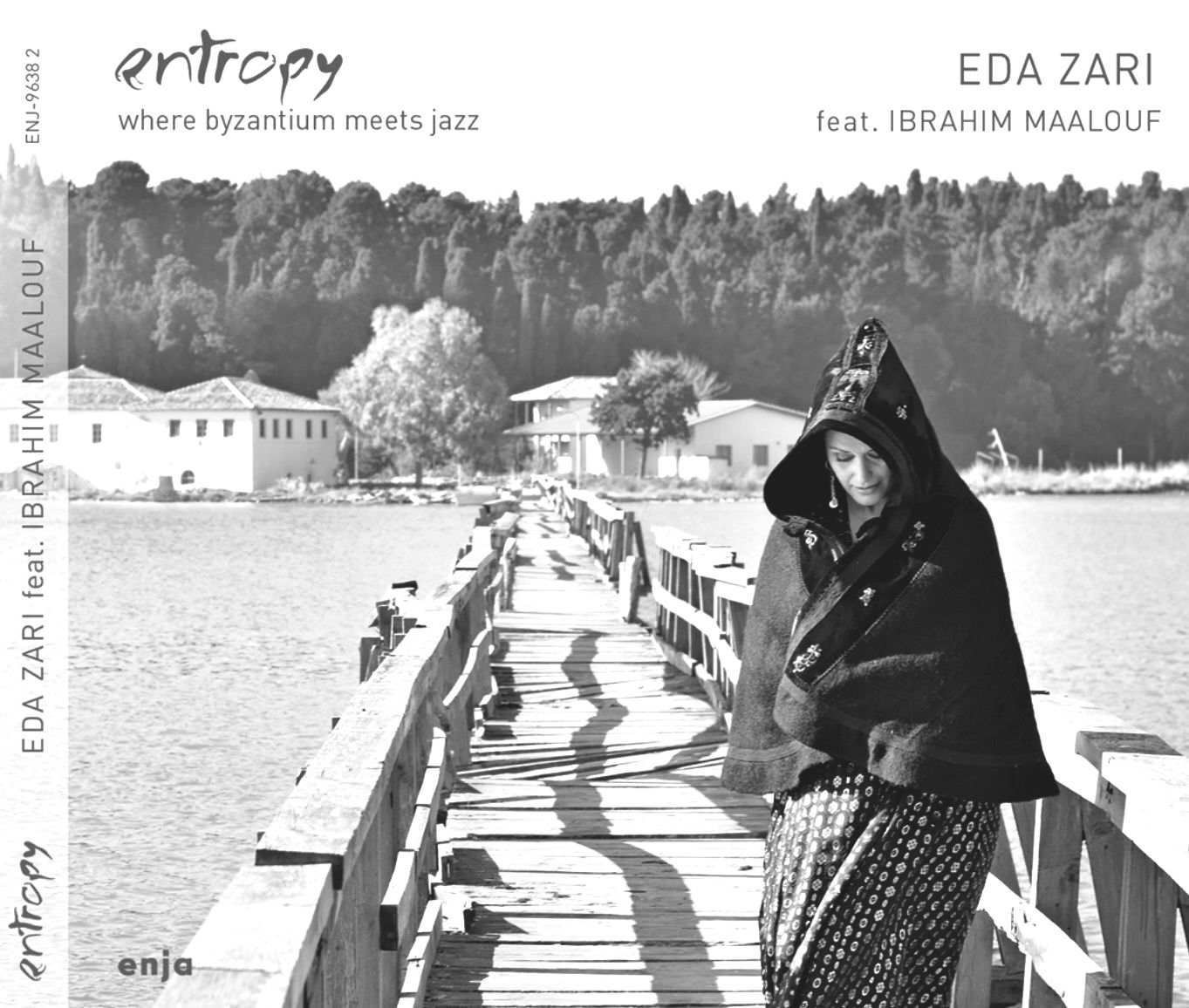
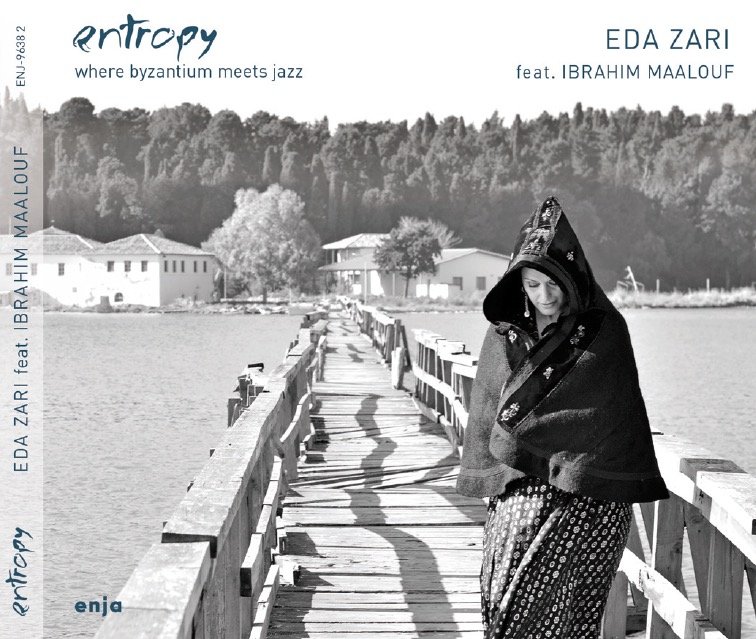
Entropy — Where Byzantium Meets Jazz
The concept statement for Eda Zari’s Entropy: an octet of Byzantine hymns transformed through jazz, polyrhythm, improvisation and Albanian vocal traditions, dedicated to cultural survival and to Theofan S. Noli.
Where Byzantium meets jazz!
This is an ambitious album, a first of its kind in musical concept: an octet of hymns selected from different cycles of Byzantine religious ceremonies, arranged and interpreted within a complex jazz context rich in polyrhythmic, layered harmonies and improvised melisma.
Jazz and the kalophonic qualities of Byzantine chant form an interwoven musical biome through which the emotional spirit of the sacred texts can be conveyed.
Within this landscape, Eda Zari and her carefully chosen musicians dare to embody the liturgical-pastoral “code” of the troparia.
In their original form, the hymns were written in the approximately 1,500-year-old system of Byzantine musical notation known as parasymantiki — examples of which are also preserved in the Byzantine and post-Byzantine manuscript collection of Albania’s Central State Archive in Tirana.
Through piano cadences and solo vocal colour, each hymn develops dynamic variation and sound symbolism, discovering a new language rich in solemn accents.
The hymns are presented convincingly to listeners able to appreciate tradition not only in Byzantine sacred song but also in jazz.
Yet Zari does not intend to remain only within the traditional liturgical sphere.
“Recognizing the outstanding contributions of experts and musicologists in preserving the original form of psaltic art, we have chosen to pursue a different aim. Our musical model has less to do with our individual tastes than with the challenge of making a collective pilgrimage,” says Zari.
The collective murmur within these hymns matters more than the song as individual display.
So does the bordun — the sustained sound sung by several voices in unison, like a clustered pedal — and the magical iso of Albanian polyphony.
The iso is an affirmation of unanimity, close to the artistic message of this album.
The journey resembles a melodic-rhythmic odyssey: after chaotic labyrinths, waves of creative ideas and reflection on music and word, the triumph arrives as the emotional energy of the present moment.
The novelty proposed by Zari and her musicians begins with the title itself: Entropy.
In thermodynamics, entropy is a measure bound up with transformation, energy and change.
Here entropy is placed inside a musical universe in motion.
Melody detaches itself from its past and gathers momentum in order to create present-day sound, while language acts as a spiritual guide conveying the sacred message.
A significant part of the repertoire gives new musical breadth to the Divine Word translated into Albanian by Bishop Theofan S. Noli.
Every culture of religious music, including Byzantine music, has deep connections with folk practice.
Music helps human beings express the challenges, joys and lamentations of life.
Together with words, it helps us lift faith toward the sacred.
This banquet of sound and language is carried by exceptional musicians.
They come to the project from multicultural backgrounds, and every performance is offered in the name of music and artistic honesty.
They all deserve our gratitude.
Dedication & Thanks
Entropy is Eda Zari’s homage to Syrian, Armenian and Lebanese artists, and to all those who, in troubled times, are trying to preserve their culture and cultural heritage.
The album carries the hope and conviction that even through music we can oppose war in Syria and elsewhere in the world.
It is also dedicated to Bishop Theofan Stylian Noli (1882–1965).
A figure of extraordinary breadth, Noli distinguished himself especially through his literary and liturgical translations.
His translations of Orthodox services for Albanian Christians form a cornerstone of liturgical and theological thought and expression in Albanian, and his name will remain inseparable from that achievement.
Many thanks to: Ibrahim Maalouf Rhani Krija Florian Weber Hayden Chisholm Dietmar Fuhr Joan Kukuzeli Byzantine Choir / KOASH
Special thanks: Sokol Çunga
Ibrahim Maalouf photo © Ulla C. Binder © Eda Zari. All rights reserved.
CONTINUE READING →