Archaic Torso of Apollo — Rainer Maria Rilke
Eda Zari’s Albanian translation of Rilke’s “Archaic Torso of Apollo”, with reflections on the poem’s relationship to Auguste Rodin, the power of the fragment and the famous imperative to change one’s life.
Rainer Maria Rilke English rendering cross-checked against the German original and Eda Zari’s Albanian version
Archaic Torso of Apollo
We did not know his unheard-of head, where the eyes had ripened. Yet his torso still glows like a candelabrum, in which his gaze, merely turned inward,
still holds and shines. Otherwise the curve of the breast could not blind you, nor could, in the quiet turning of the loins, a smile pass toward that centre which once bore creation.
Otherwise this stone would stand disfigured and stunted beneath the transparent fall of the shoulders, and would not shimmer like the skin of a beast;
nor break from all its edges like a star: for there is no place here that does not see you. You must change your life.
From Der neuen Gedichte anderer Teil (1908)
Notes by Eda Zari
Rilke wrote “Archaïscher Torso Apollos” in 1908; it belongs to the second volume of New Poems and remains one of his most celebrated sonnets.
What moves through the poem is Rilke’s extraordinary ability to establish relations among thought, image and object, and to discover within them an uncommon harmony. “Things” become almost magical words: the beginning of a new poetic path.
I am inclined to read the poem, too, as a debt of gratitude to Auguste Rodin.
“You must change your life.” For me, this imperative carries Rilke’s profound sensitivity toward Rodin. We tell someone to change their life only when we love them, when we care what becomes of them.
Rilke and Rodin did care for one another, even if each did so in his own strange and highly individual way. Their extraordinary artistic relationship therefore remained ambivalent: a meeting of two rare creative temperaments.
The friendship began with an incomparable emotional closeness, developed into intense professional collaboration and ended with the two men becoming strangers to one another. Yet the artistic results of that collaboration stand apart from the difficulties of their personal relationship. Seen across the period of their professional intimacy, they open striking perspectives onto the work and inner life of two major figures of modern art.
Rilke worked as Rodin’s private secretary in 1905–06.
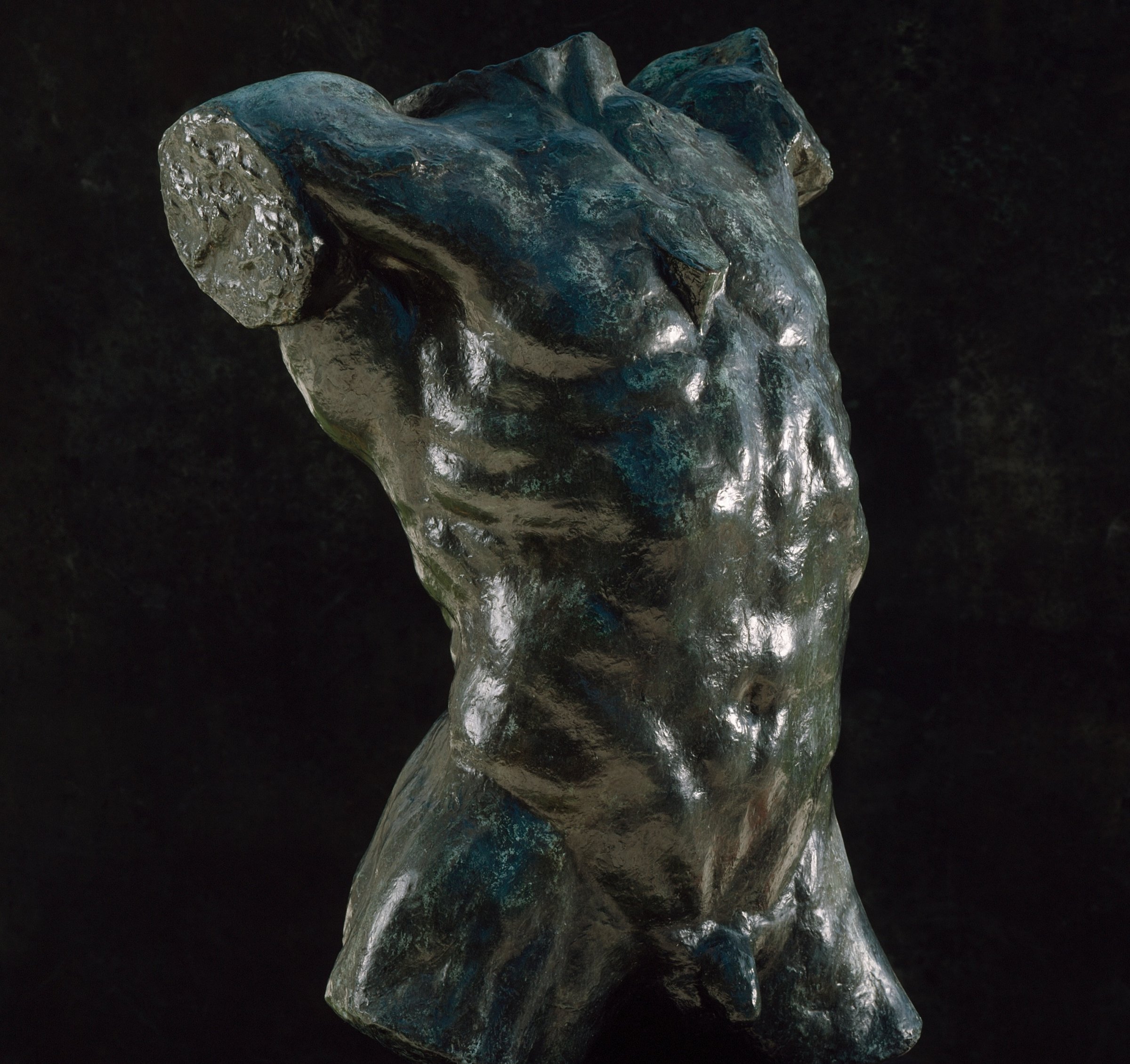
Rodin was among the first artists to make the torso deliberately into an autonomous fragmentary work of art: self-contained, controlled and charged with symbolic form, yet capable of conveying a palpable bodily presence.
Rilke makes that artistic intention visible in language. He is drawn to completing what is absent — to joining the invisible fragments within an imagined, emotionally charged whole.
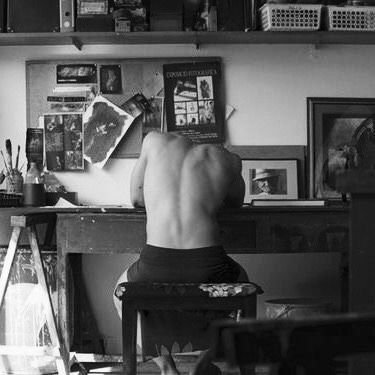
Photographic material: — Marsyas — Torso of the Falling Man, Auguste Rodin. — Rainer Maria Rilke at work. — Rodin in his studio, Paris.
© 2020 Eda Zari. All rights reserved.
CONTINUE READING →