Vasil Tole: “Praising God through Jazz — Eda Zari’s Entropy Arrives Completely Differently”
Composer and scholar Vasil Tole reflects on Entropy as a radical meeting between Byzantine hymnody and jazz, centred on prayer, transformation and a new relationship between sacred text, voice and instruments.
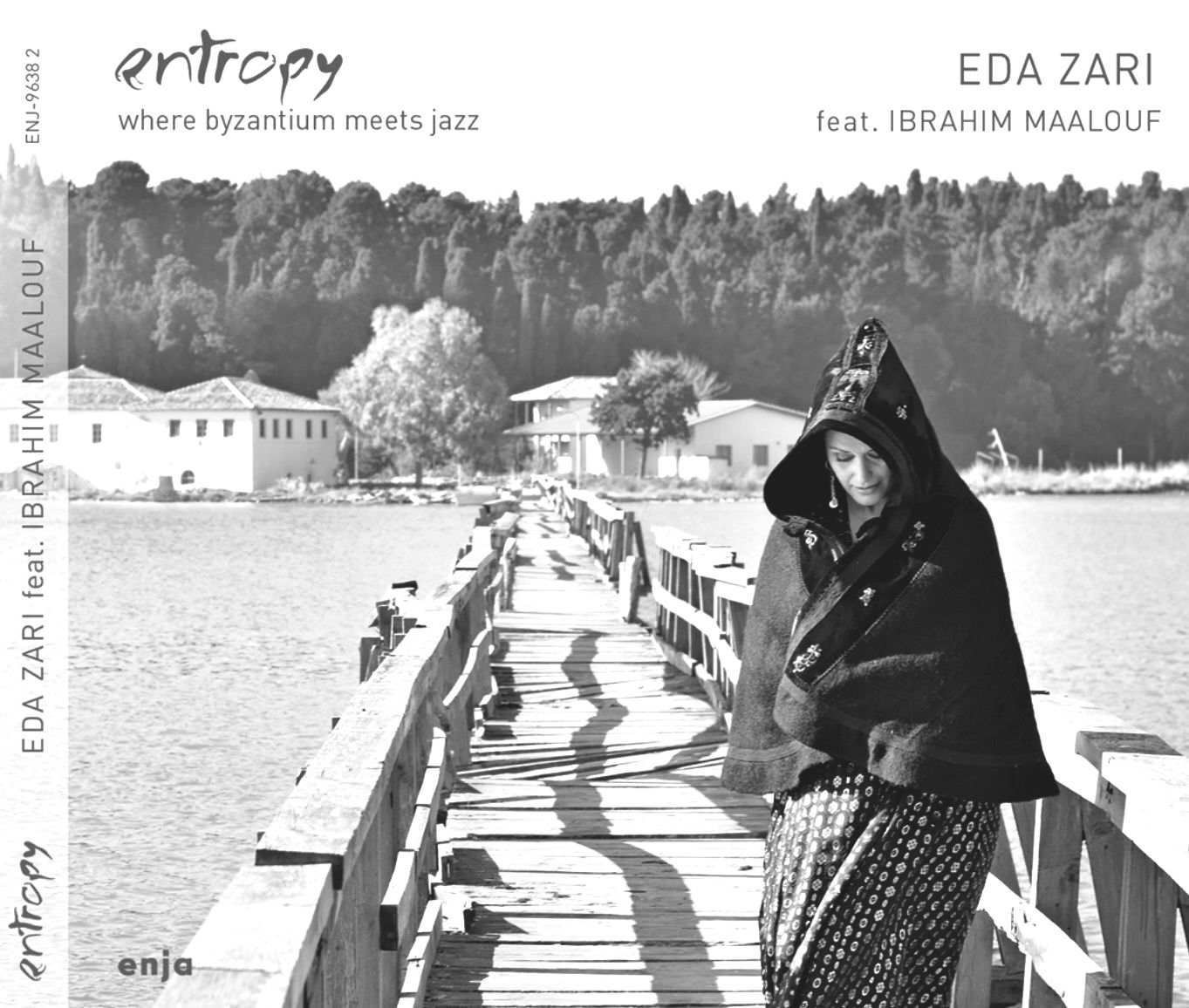
Praising God through jazz — with Entropy, Eda Zari arrives as something entirely different for everyone.
There is not the slightest doubt that Entropy is a different kind of album.
Different for the great tradition of Byzantine music; different for jazz itself; different for the musicians of the international accompanying ensemble; different for the members of the Byzantine choir Kukuzeli; different for listeners; different for the sacred word itself — and different for Eda.
The idea of creating a jazz alternative rooted in the great Byzantine musical tradition was surely a brilliant spark.
The project is based primarily on hymns such as Kurrë nuk po merret vesh, Eni shihni, Lavirja, Zoti është bashkë me ne, O bukuri me nam, Kyrie Eleison, Krishti u ngjall and Agni Parthene, with texts grounded in Fan S. Noli’s Albanian renderings and sung in Albanian by Eda Zari.
There are two stubborn facts one has to confront before listening to the album.
The first is that the great Byzantine musical tradition excludes musical instruments from the Orthodox liturgy.
The second is that jazz — great and all-powerful jazz — has entirely different roots and offers few, if any, established models of Byzantine musical inspiration to which one might refer.
So where is the solution?
Prayer.
Prayer seems to be the essential key to the mystery of making jazz with Byzantine roots.
Prayer and worship, carried through Eda Zari’s blessed musical voice, dissolve the initial contradictions and seek to establish the foundations of a new perspective on both Byzantine music and jazz.
Through prayer, Zari realizes — perhaps for the first time in album form — the spirit of Psalm 150 from the Bible, that “strange” psalm which says:
“Hallelujah. Praise God in his sanctuary; praise him in his mighty heavens. Praise him for his mighty deeds; praise him according to his excellent greatness. Praise him with the sound of the trumpet; praise him with harp and lyre. Praise him with tambourine and dance; praise him with strings and pipe. Praise him with sounding cymbals; praise him with loud clashing cymbals. Let everything that has breath praise the Lord. Hallelujah.”
So why not:
Praise God with the sound of jazz?
Prayer therefore introduces the first innovation: Byzantine music with instruments.
More than that, the album presents the Byzantine hymns first in relation to their original identity and then, almost as if moving them around the face of a clock, carries them into new musical realities — realities that belong naturally to jazz.
Yet prayer remains at the centre.
Sometimes it appears as the relationship between the individual singer and the sacred; sometimes as the relationship between the individual instrumentalist and the sacred.
It is prayer directed toward God, without the need for proper names.
At its core, prayer remains prayer — now expressed through musical alternatives that leave the architecture of churches, extend outward and seek to fill the wider world through their truth, while simultaneously returning toward the roots of Byzantine music before it became sacred: when it was still a secular, popular beginning, just as jazz itself has roots in folk music.
The album is an act of worship toward the sacred word regardless of changing metres and melodies, instrumental solos, tonal contrasts, classical Byzantine choral passages and Zari’s leading role as soloist.
And it succeeds in making prayer audible — because prayer makes all of us better.
The title itself, Entropy, points to the same process.
Everything in the universe eventually moves from order toward disorder, and entropy measures that change.
We need entropy in order to create new energy through transformation, by changing the direction of something familiar so that something new can emerge.
It is like water used to irrigate fields: at a certain point we redirect its flow in order to reach another piece of land.
That, in a few words, is the album Entropy by Eda Zari and her fellow musicians.
It is evidence that there is always time for innovation, and that discovering the human being’s spiritual journey is perhaps the truest form of entropy.
Published in NewsBomb, Tirana, 18 January 2017.
CONTINUE READING →