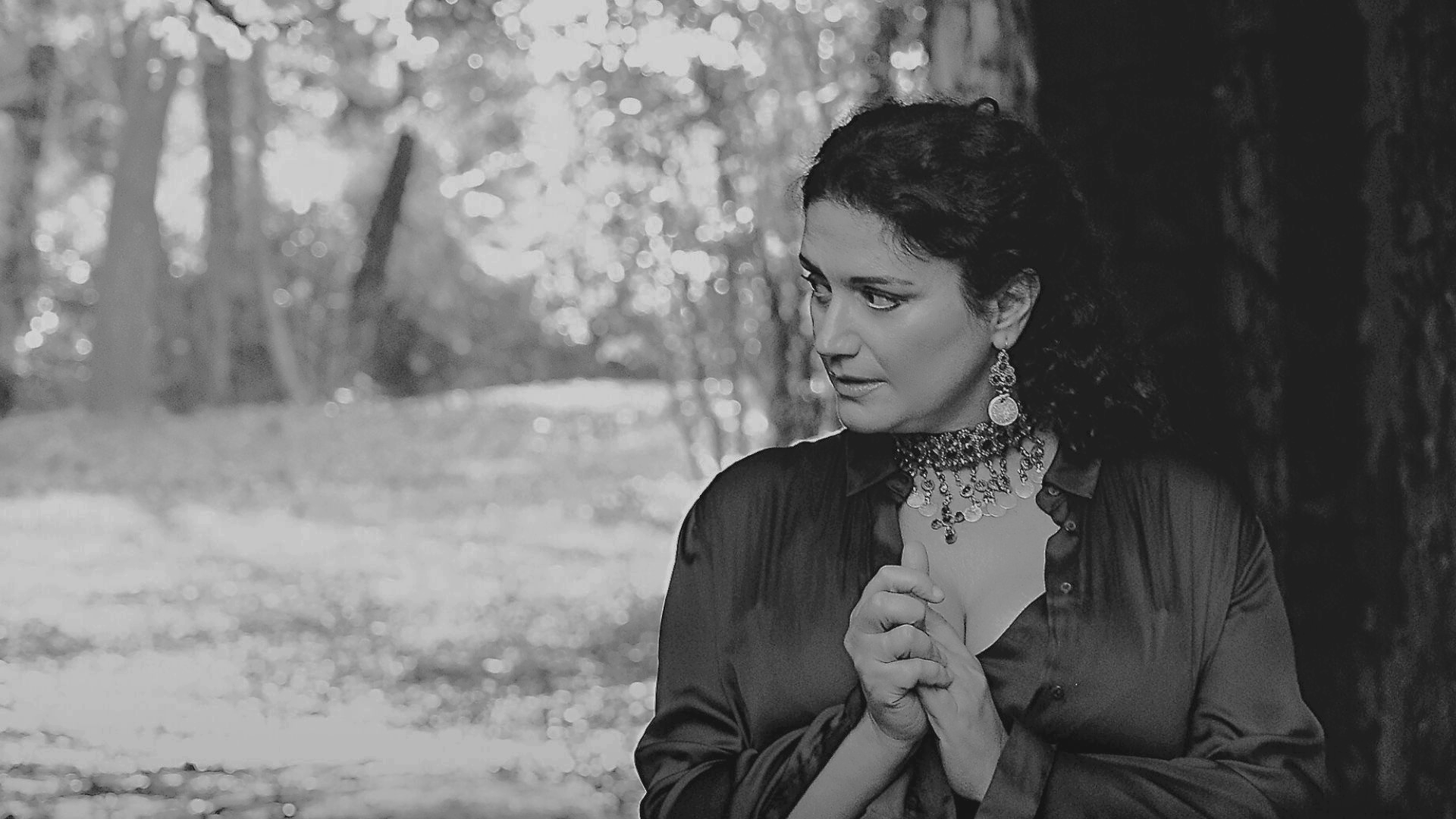
Eda Zari and Entropy: Where Byzantium Meets Jazz. By Dr Mikaela Minga
Dr Mikaela Minga reviews Entropy, Eda Zari’s concept album in which Byzantine liturgical chant, Albanian vocal traditions and contemporary jazz collide, merge and transform one another.
Review / Dr Mikaela Minga
It was at the beginning of 2014 that Eda Zari first spoke to me about the idea for a new album inspired by Byzantine music.
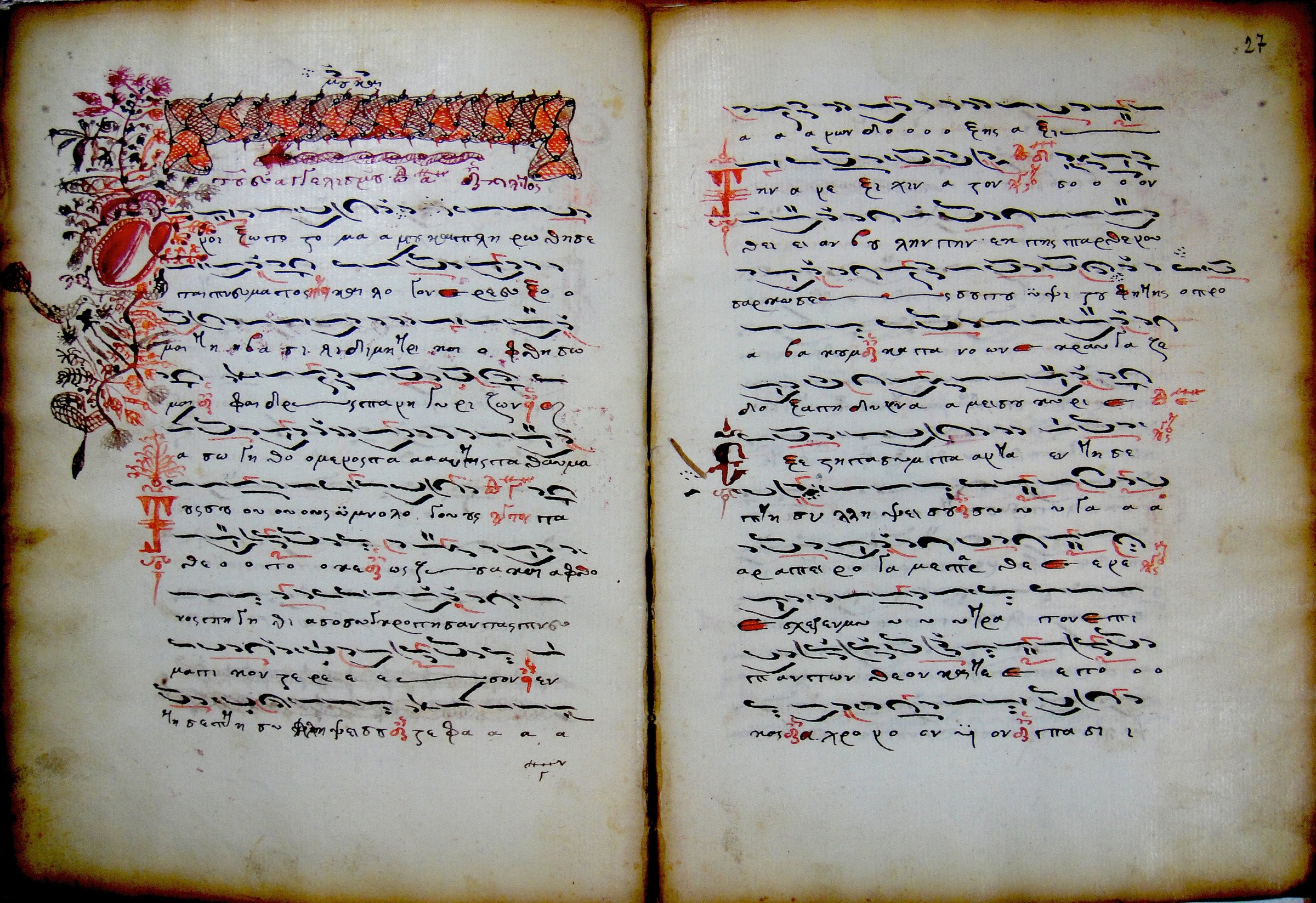
Strictly speaking, this is not simply “music” but a liturgical chant belonging to the spiritual tradition of Eastern Christianity. Its origins reach back to the rise of Constantine the Great and the formation of the Eastern Roman Empire centred on Constantinople.
Today it is practised in local variants and different languages within the respective religious communities across the Balkans, Eastern Europe, Italy, Turkey, the Middle East, Egypt, Ethiopia and southern India.
It is a world of its own, although it shares affinities with other Christian, Islamic, Jewish, Buddhist and Hindu traditions.
In giving voice to the sacred Word, this music — even within the celebratory structure of the rite — possesses a sonic “magic” of its own. In certain circumstances it can unfold an alluring vocality of sublime beauty.
That vocal potential was perhaps Eda Zari’s first impulse in turning her idea into a bold artistic project, singular in its kind.
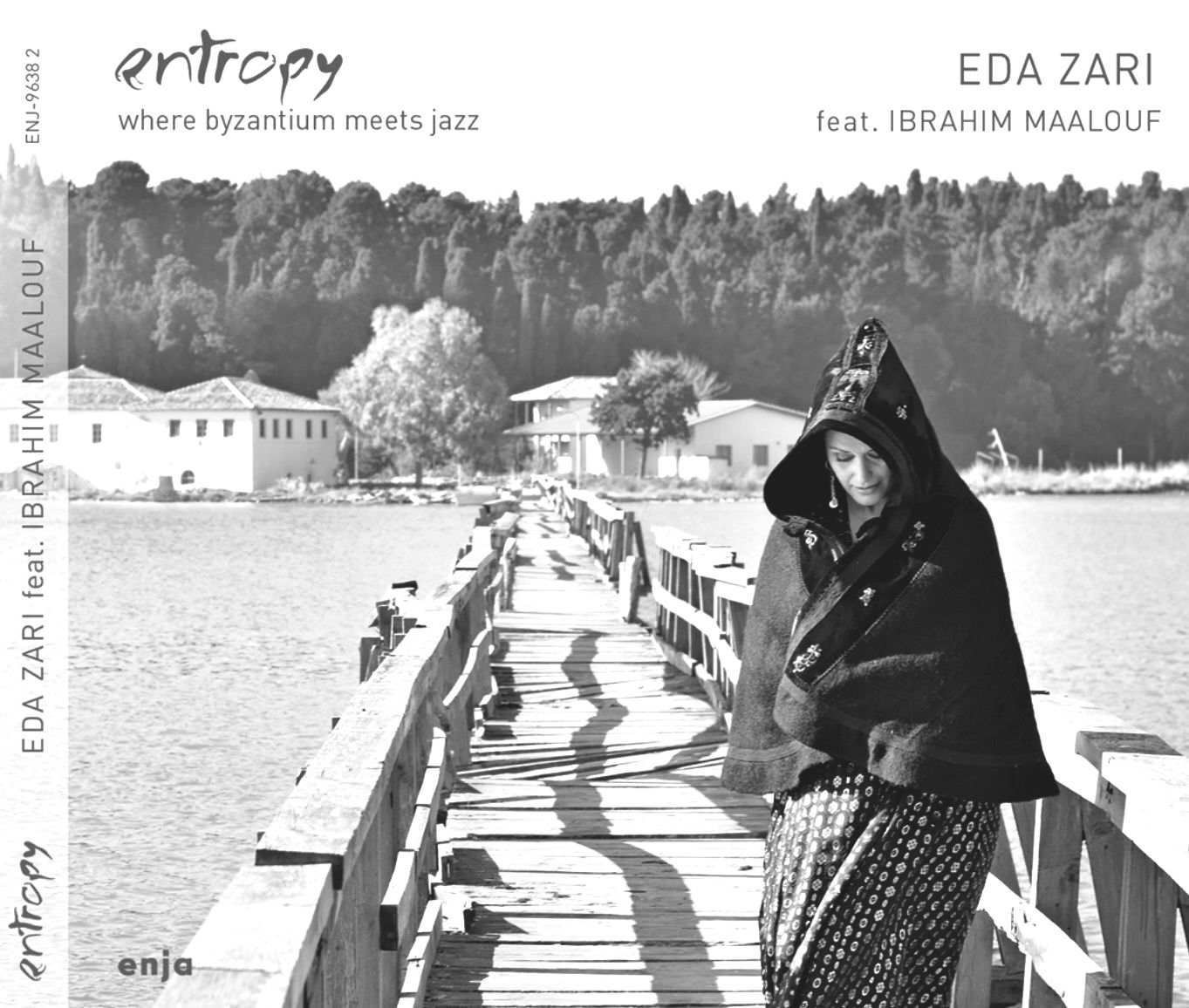
Roughly two years after that early conversation, I now have Entropy in my hands: the new album released by Enja Records and distributed on the Albanian market through the Adrion Ltd bookstore network and Hemingway Fun Club Tirana.
On this album, Byzantine liturgical chant meets jazz through the transformative force of entropy:
“Entropy: Where Byzantium Meets Jazz.”
That, in condensed form, is the aesthetic statement with which the album presents itself, accompanied by the suggestive lines of William B. Yeats’s Sailing to Byzantium.
Zari has indeed drawn specifically on the Byzantine tradition of Constantinople and on the local and individual variants that continue to breathe within it today.
Still, the artist’s primary focus remains Albania and its own practices: Theofan S. Noli’s translated and adapted Kremtore e Kishës Ortodokse (1947); Noli’s Triodi dhe Pesëdhjetorja (1947); and Theodhor Peci’s adapted and composed Anastasimatari (2015).
She has selected troparia and hymns performed in Albanian, collaborating on several pieces with the Joan Kukuzeli chanters’ choir of the Orthodox Cathedral in Tirana and with protopsaltis Theodhor Peci.
The texts are taken from Fan Noli’s adaptations.
The album includes some of the best-known troparia and prayers in the spiritual tradition of Eastern Christianity, such as Kyrie Eleison — Mëshiro o Zot, “Lord, Have Mercy” — and Krishti u ngjall, “Christ Is Risen”.
They are treated through a wide variety of instrumental timbres and solo improvisations that join the voice in an exchange that is both highly evocative and remarkably transparent.
Six hymns drawn from different liturgical services complete the body of the album.
These are among its most striking pieces and create an emotional density ranging from lament and worship to praise, but also to situations of strong internal contrast.
I would single out O bukuri me nam, Eni shihni and, especially, Lavirja and Zoti është bashkë me ne.
In the latter two, which in my view are the climactic points of the entire album, an absolute climax is reached through this creative melodic-rhythmic energy.
That energy breaks down the dividing lines between strict musical formulas and abstraction and improvisation; between voice and instruments; between the adored Word and music; and finally between Byzantium and jazz.
Yet beneath the surface there are also echoes of Renaissance music, European Baroque and the universal language of chamber music.
This energy is set in motion by the melodist, Eda Zari.
Within a musical language so essential to Byzantine psaltic art, she creates a laboratory of her own.
By internalizing the poetic-musical logic of this art, she simultaneously injects her own artistic experience into it — an experience in which the traditional vocalities of Albania resonate, especially those of southern polyphony, alongside a finely shaded blues vocality and the discipline of classical lyric singing.
Music acquires an importance equal to that of the word, while the monody of the chant naturally gives way to multi-part singing with iso — to polyphony.
These are the two most distinctive characteristics of Entropy.
What we encounter is a collision and reconciliation of incompatibilities.
In Byzantine chant, music serves the word.
Jazz does not need the word.
And yet here jazz becomes an instrument of the word, while music detaches itself and gains an aesthetic and concert value of its own.
This is a form of deconstruction that brings to mind the meaningful line from the Christmas troparion: “and the earth offers the cave to the Unapproachable One.”
The travellers who join Zari on this pilgrimage are prominent figures on today’s international jazz and avant-garde scene.
There is Ibrahim Maalouf with his quarter-tone trumpet; the rhythms of Rhani Krija; the tonal finesse of Hayden Chisholm and Dietmar Fuhr.
Musical production and arrangements bear the signature of Florian Weber, a composer and pianist known for his distinctive position between jazz, avant-garde music and classical music, and a winner, among other honours, of the prestigious Echo Jazz Award.
Weber’s arrangements provide an exceptionally fertile sonic, timbral and rhythmic ground for this chant.
They are at once expressionist and minimalist, revealed through carefully rationed themes and motifs, transparent harmonies, rhythmic variety — including, inevitably, the 7/8 characteristic of much Albanian music — and Weber’s unmistakable touch at the piano.
Examining these details is important if we are to understand the novelty and courage of this album.
Its novelty lies in dismantling centuries-old codes of traditional chant.
Its courage lies in accepting the “risk” of failing to conform to the expectations of either a broad or a specialist public; of clashing with someone’s religious convictions; or even with the views of those who today regard themselves as the guardians and promoters of this heritage.
From this perspective, Entropy can be described as a concept album — an album traversed by a single concept, entropy, that connects all its materials within a shared environment.
A number of musical and cultural layers overlap on the album.
I believe they will be discovered gradually both by the Western listener — equipped with a particular listening experience but less familiar with this culture — and by the Albanian listener, for whom a spiritual tradition such as Byzantine chant is almost entirely unknown, if not buried beneath prejudicial myths.
Still, I would like to uncover one of those layers here.
Consciously or unconsciously, Entropy refers to the idea of the “Other” that the West itself manufactured during colonialism and that later became dominant.
That “Other” — non-European, Byzantine, feminine — enters Entropy charged with a distinctive creative energy.
Entropy is therefore a sonic experience whose significance lies not only in its emotion and narrative force, but also in its potential to confront us with those qualities.
Through that confrontation, we can understand what from the past is capable of surviving in music; what is capable of resisting and, through resistance, of unsettling, provoking and raising questions about the present and its false unity.
Ultimately, Entropy is a listening experience that, by sailing toward Byzantium, brings us closer to music itself and to the immeasurable value music has in our existence.
Published in ResPublica, 28 December 2016
© Mikaela Minga. All rights reserved. Eda Zari photograph © Eduard Pagria.
CONTINUE READING →