Song-Prayer —
Written at the beginning of the COVID-19 pandemic, Eda Zari traces historical music and prayer against plague, from Marian invocations and polychoral masses to a modern call for collective responsibility, care and hope.
A song-prayer against plague — yesterday.
A song of deliverance from “corona loneliness” and fear — today.
The terror people experienced must have been almost hellish when, in the Middle Ages and early modern period, plague descended on towns and villages and devastating epidemics spread.
The intervals in which mass death swept across the West and individual regions were often so short that memory alone could scarcely preserve an adequate image of unexpected death as it knocked from door to door.
As usual, superstition offered a simple explanation: punishment from God for human wrongdoing.
Plague came to signify mortality in its most absolute form, and sudden death for sinners as eternal damnation.
In early Christianity, the Virgin Mary was invoked as the first protector in times of danger.
Alongside Mary, people prayed to other protective saints, especially the martyr Sebastian [1].
Saints such as Sebastian and Rochus began their long history as protectors against plague with an almost divine stature in popular piety.
According to legend, Sebastian acted as an intermediary between God and sinners when plague was believed to have been driven away in Rome and Lombardy in the sixth and seventh centuries.
From the fifteenth century onward, sacred acts and the imagined “healing” of heavenly punishment became increasingly intertwined with art.
Prayer and song in this context have received far less scholarly attention than they deserve.
Songs praised and invoked healing saints and protectors against plague.
Among the best-known prayer motifs was the Marian protection prayer Sub tuum praesidium [2].
The protective mantle of Mary symbolized defence against the arrows of plague, which believers sometimes imagined as being shot by angels and understood as divine punishment.
There were also songs dedicated to plague saints such as Sebastian and Aegidius.
In this period, the role of women singers from the middle and lower strata of society repeatedly appears: nuns, ascetic midwives, women accused of sorcery, and even beggars.
These groups of women nevertheless often showed extraordinary courage.
Through acts of care they followed the Christian works of mercy and the commandment of charity.
It is therefore not surprising that the intensity of sung prayer became especially important in times of disease and influenza pandemics.
The devastating plague epidemic that depopulated large parts of the West around the middle of the fourteenth century eventually prompted Pope Clement VI, then residing in Avignon, to encourage liturgical responses throughout the Church, including specific Mass formularies [3] for plague and emergency.
One artistic high point in this tradition was the Proprium Missae by Orazio Benevoli in 1656, commissioned by Pope Alexander VII when Rome — Caput Mundi — was struck by plague accompanied by typhus, cholera and other illnesses.
Within this repertoire, we should also remember Missa in angustia pestilentiae, a monumental work for sixteen voices and four choirs, written in a brilliant polychoral style and later regarded as a major artistic response to a deadly epidemic.
Such large-scale sacred works were also adapted for smaller concert settings.
Among the masterpieces associated with this wider tradition are Claudio Monteverdi’s Litania de Beata, the penitential psalm [4] Miserere mei, Deus by the Neapolitan composer Leonardo Leo, and motets of powerful tonal character by Orlando di Lasso.
Curiously, musical invocations against plague have rarely been the subject of systematic scholarly study.
More recent research has begun to reveal a richly varied landscape of art music extending from the fourteenth to the nineteenth century.
Those discoveries inspired a historical artistic project presented not long before I wrote this text, in which I personally participated as a soloist.
Since the middle of November last year, it has no longer been a secret in early-music circles that this repertoire contains genuine pearls.
In that context, beyond their value as a novum, performances and presentations of music written against plague — initially in Koblenz and Cologne — deserve serious attention today as an unusual chapter in music history.
Seen from the present, the project now feels almost prophetic.
And here we are.
Not facing plague, but coronavirus.
During these first days and weeks of the coronavirus crisis, even ordinary questions unsettled me.
Can I receive a postcard from Bologna or Florence?
Can I order a Nikon lens or camera from China?
Yes, because suddenly even ordinary actions appear connected to a threat to life.
One question immediately produces another:
Are we safe?
How much knowledge and transparency do we really have about the situation?
Uncertainty grows through speculation.
Then one begins to feel that politicians are turning fear into politics.
Why?
Because fear is contagious even without any contact with the virus.
It has always been so — whether the subject was bird flu, Ebola or AIDS.
In every epidemic, demagogues discover their “great hour”.
Fear often spreads dramatically faster than disease.
And eventually, at the neighbourhood café, we are left joking with one another:
“In the end, garlic and raki will probably save us.”
Will this corona ever stop?
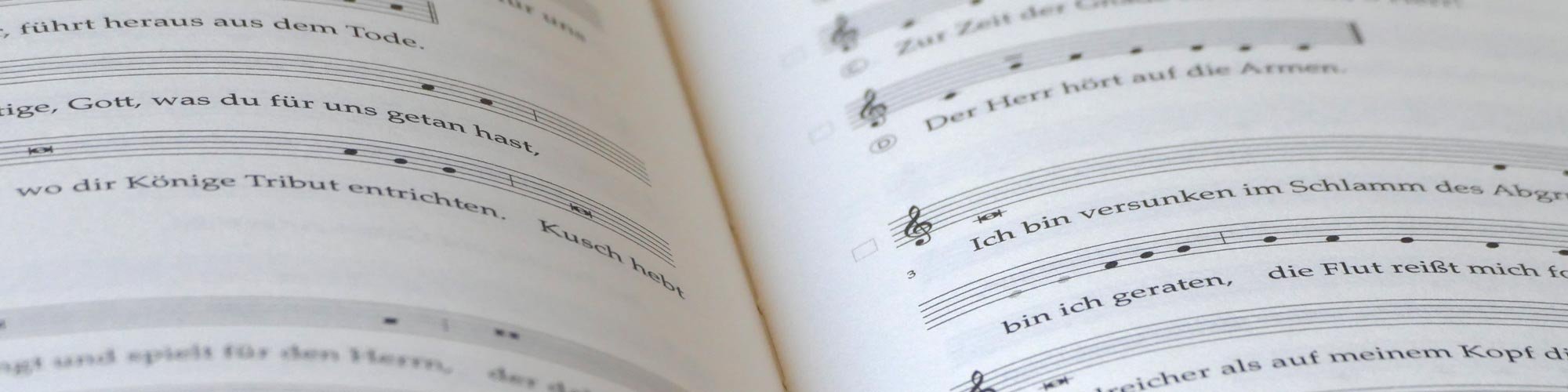
In musical language, a corona — a fermata — is a sign of suspension or holding.
It is an open sign: a dot beneath or above an arc, an undefined pause that tells the singer or instrumentalist to prolong, decorate or shape the end of an aria, the middle of a phrase or the conclusion of a solo according to individual expression.
Perhaps the stoppage that even the earthquake failed to achieve among us is now being achieved, literally and metaphorically, by corona.
And once again music comes back to me.
Music with which one sings the prayer of salvation, the prayer of enchantment, the calling-forth of a miracle.
In modern times, however, we have placed almost all our hope in an antiviral solution, expected to arrive when science and circumstance allow it.
Leonard Cohen’s Hallelujah comes to mind — the song’s image of a “secret chord” that pleases the Lord.
Epidemics last much longer than miracles.
I read that the Italian singer Gianna Nannini had announced a virtual concert against “corona loneliness”, to be streamed live from her home in Milan.
“I am in Milan and want to perform some songs alone online so that we can all feel a little closer and safer,” she wrote.
“We will do our best to get through this terrible time together.”
For me, this example embodies awareness, collective responsibility and encouragement.
Plague is still remembered as the embodiment of apocalyptic disease.
Coronavirus did not yet possess a written past capable of weighing on us in the same way.
But we must understand that it is writing its history now.
Our civic responsibility is therefore clear:
we must behave more responsibly toward one another.
If you have the impression that neighbours, colleagues or relatives are not doing so, encourage them to act responsibly through your own good example.
Just as people dared to do in the Middle Ages, in this time of danger each of us must begin with ourselves and think about “help and healing”.
That is the song to which our conduct in defence of life must keep time.
Hallelujah.
© 2020 Eda Zari. All rights reserved. Published 16 March 2020 at Peizazhe të Fjalës.
Notes
[1] Saint Sebastian, a plague saint traditionally depicted with arrows in his body, was venerated early in Ravenna, Spain and North Africa. His cult expanded after 680, when the ending of plague epidemics in Rome and Pavia was attributed to the carrying of his relics through the streets. Sebastian is traditionally a patron of soldiers and archers, and believers invoked him against plague and other epidemics.
[2] The prayer Sub tuum praesidium is attested in a Greek papyrus fragment dating from the third century CE.
[3] The proprium refers to parts of the Mass that vary according to the liturgical year, occasion or immediate circumstance, including war, epidemic and other emergencies. The complete set of liturgical texts for a specific feast or Mass may also be called a Mass formulary.
[4] The penitential psalms are a group of psalms centred on confession, repentance and guilt.
[5] Reference to Leonard Cohen’s “Hallelujah”.
CONTINUE READING →