Sailing to Byzantium — by Sokol Çunga
Archivist and paleographer Sokol Çunga introduces the Byzantine musical tradition behind Eda Zari’s Entropy, tracing its history, liturgical practice and revival in Albania.
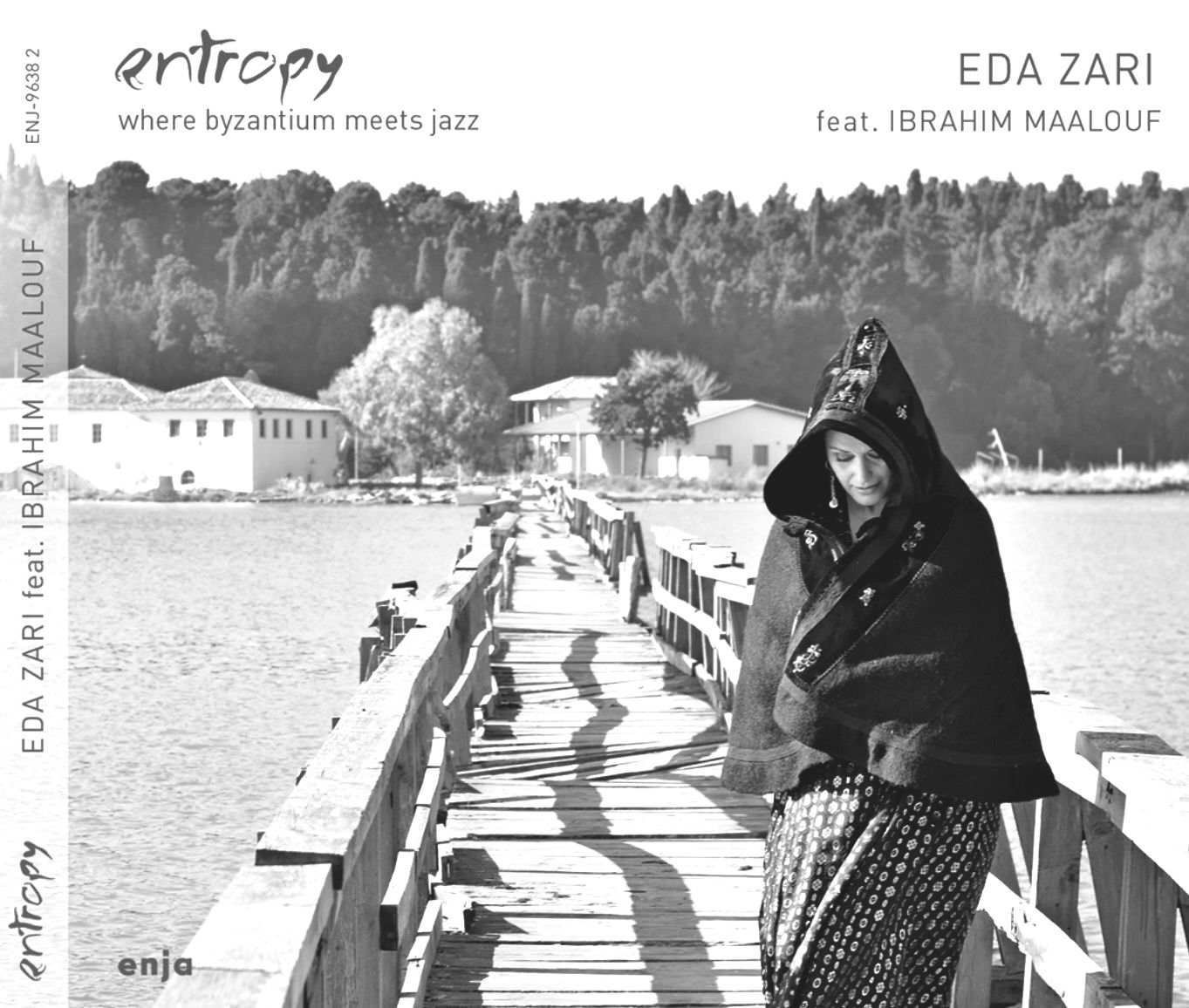
Entropy / Album release, September 2016 / Eda Zari feat. Ibrahim Maalouf / Enja Records Germany
“[...] And therefore I have sailed the seas and come To the holy city of Byzantium.” — William Butler Yeats, Sailing to Byzantium
In the modern Western imagination, Byzantium continues to represent an exotic, mysterious and dark historical period belonging to a very distant past.
In everyday use, the adjective “Byzantine” may even refer to a person or behaviour that is devious, illicit or morally suspect.
The monuments that still stand across the former expanse of the Byzantine Empire quietly contradict this prejudice: visible ruins and others still to be unearthed, documents preserved in Europe’s historical archives, architecture, literature, art and — what is less widely known — music.
Although Byzantine music played an important role in the development of Western music, it has remained terra incognita for most Western researchers and musicians — apart from a very small specialist community — as well as for the wider public.
The reasons for this lack of knowledge are complex and lie on both sides.
On one side are the cultural and linguistic differences between East and West, a distance reinforced after the schism of the Churches in 1054, followed by a relatively narrow scholarly interest focused primarily on the areas where the two civilizations overlapped.
Western researchers concentrated particularly on manuscripts from the tenth to the thirteenth centuries, while later “neo-Byzantine” music was often dismissed — sometimes with mockery — as virtually indistinguishable from Ottoman music.
After the fall of Constantinople and the destruction of the Empire, Byzantine music developed mainly within the ecclesiastical sphere and did not develop into a court music in the way classical music did in the West.
It therefore remained largely independent of state structures and known mostly to those who entered the church.
On the other side, the local communities in which Byzantine music was practised did little until relatively recently to promote its study, which also contributed to limited Western interest.
Performers and musicologists of Byzantine music often found it difficult to develop a constructive dialogue with Western audiences and researchers, partly for internal reasons — practical limitations or pride in protecting a thousand-year-old tradition — and partly because of debates bordering on cultural imperialism that Western scholarship itself helped sustain.
Meanwhile, Western music increasingly opened itself to older or unfamiliar musical models.
The interest of nineteenth- and twentieth-century Western philosophers and writers in Far Eastern culture — figures such as Friedrich Nietzsche, Hermann Hesse and others — shaped generations after the Second World War.
Searching for new paths toward happiness and spiritual illumination, while distancing themselves from what traditional Christianity seemed to offer, parts of Western society found alternatives in Eastern spirituality and culture.
Zen and Buddhist philosophy, literature and spirituality became a way of life for many people in the West and also served as leitmotifs for social and cultural movements such as the Beat Generation and the hippies.
Because Buddhist music was adopted as a ritual-spiritual form, it found a place relatively easily within modern musical culture, developing alongside genres such as rock ’n’ roll, pop and especially New Age music.
It also became increasingly present in popular American cinema.
Its broad commercial appeal naturally led to extensive exposure during the twentieth and twenty-first centuries.
Western fascination with the exotic and the old did not stop at Eastern music.
During the second half of the twentieth century Gregorian chant also attracted renewed attention.
Beyond its liturgical use and its cultivation by modern monastic choirs, Gregorian music became popular in contexts diametrically opposed to its original purpose and was borrowed by musical genres including rock ’n’ roll, pop, techno, New Age, power/thrash metal, black metal and others.
After such integration, it is easy to imagine that liking Gregorian music became a matter of taste rather than of access to information.
In the territory of present-day Albania, Byzantine music spread together with Christianity.
Its development was natural, as in other regions where the Eastern Church was active.
The only major rupture in the tradition occurred between 1967 and 1991, when the atheist Albanian state banned all forms of religious practice in the People’s Socialist Republic of Albania.
Great damage was done, but awareness of the tradition was not completely lost.
Tracing Byzantine musical traditions in Albania today is like scraping a wall covered with many layers of paint in order to bring to light frescoes hidden by time and by human intervention.
Byzantine music — a cultural unit of Byzantium
The governmental, political, military, economic and cultural entity now called the Byzantine Empire was known by its own subjects as the Roman Empire, or Eastern Roman Empire.
It was formally established in 324 CE with Constantinople as its administrative centre, a city founded by Constantine the Great and named after him.
Secular music — both vocal and instrumental — was cultivated extensively in Byzantium.
Unfortunately, that musical tradition has not survived to the present day, and the information that survives is fragmentary and limited.
What has survived is the music sung in church.
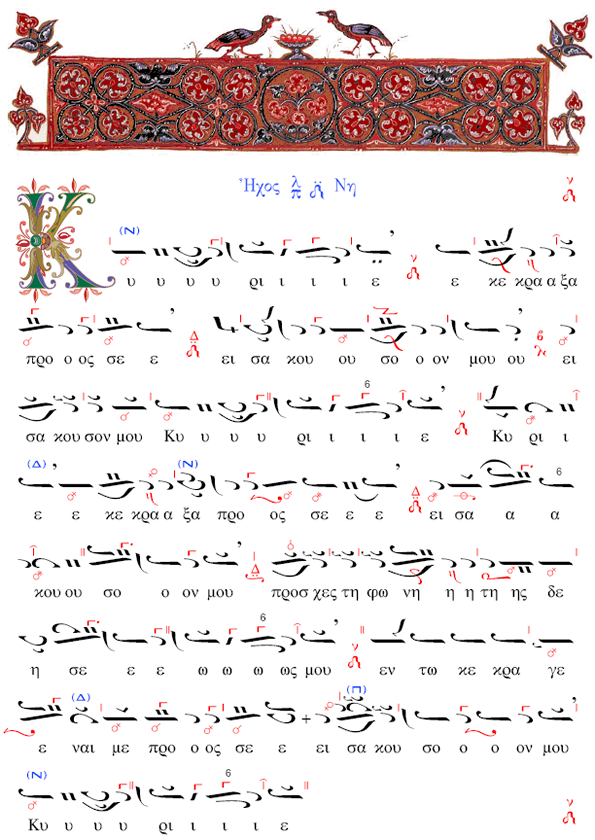
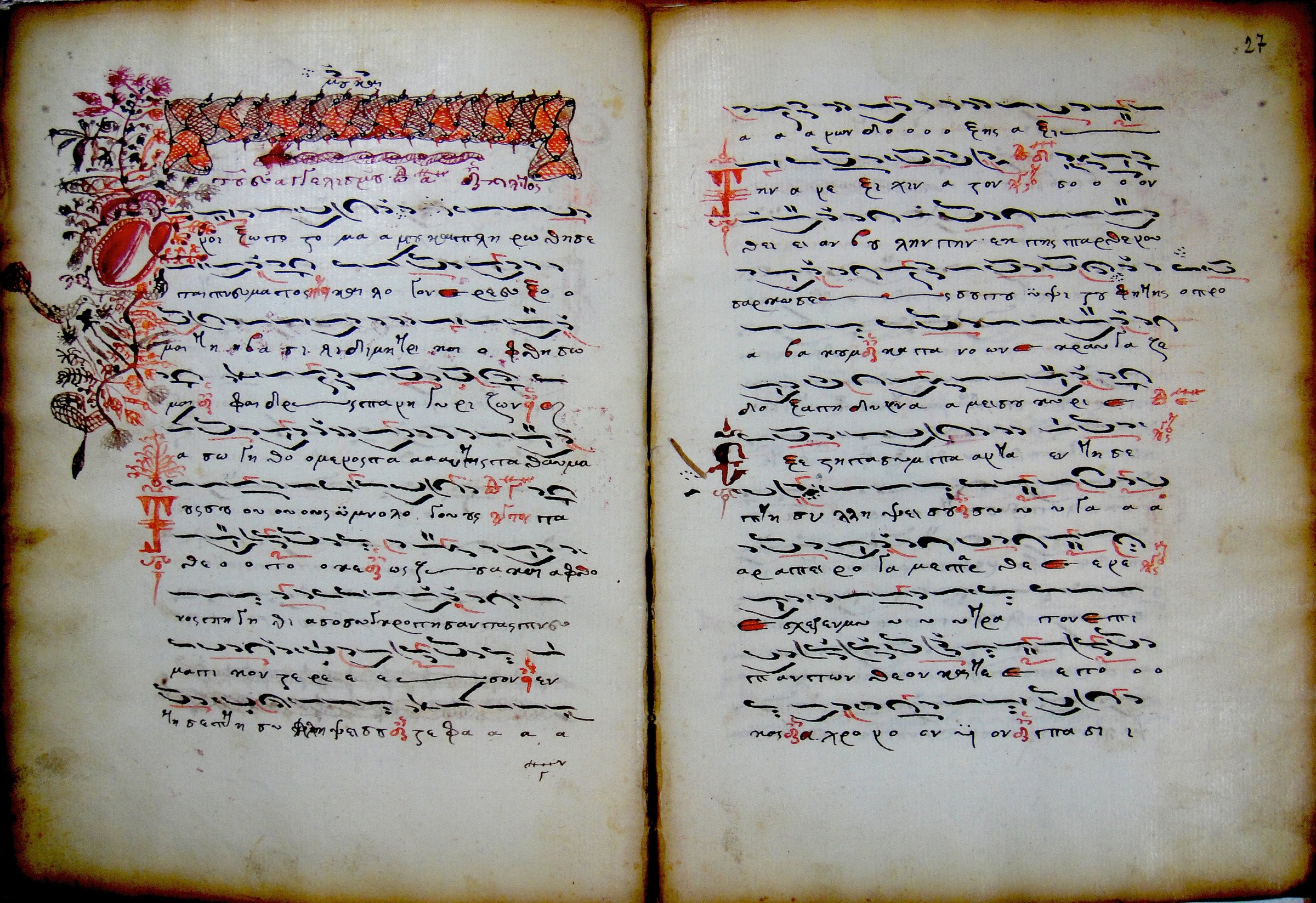
Byzantine music is vocal, monophonic and liturgical.
It was used widely in worship by the Eastern Christian Church and continued to develop even after the fall of the Empire in 1453.
Its origins are complex.
Its oldest roots can be found in Jewish religious music, ancient Greek music and poetry, and Syrian music.
Before the foundation of Constantinople, related musical practice existed in early Christian centres such as Alexandria, Antioch and Ephesus.
The oldest manuscripts containing Byzantine musical notation — the so-called ekphonetic notation — date back to the ninth century CE, while fully musical manuscripts using neumatic notation date from the tenth century.
The early Christian Church practised chanting by the entire body of worshippers.
By the fourth century, because not all believers could remember the melodies and also for aesthetic reasons, responsibility for chanting was entrusted to believers gifted and trained in the art of chant: the chanters, or psaltai in Greek.
Their task was to sing during church services carefully and with humility.
Traditionally, solo chanters and choirs were male because chanters were considered part of the lower clergy, from which women were excluded.
In modern times, however, this rule is not applied as strictly.
Women and children may chant alone or in choirs, during worship or outside liturgical ceremonies, even without receiving the traditional ecclesiastical blessing.
According to the theological and mystical belief of the Orthodox Church, Byzantine music was transmitted from angels to human beings during the first centuries of Christianity, at a time when believers were thought to pray and chant together with angelic choirs.
This concept, which remained influential until the fall of Byzantium, had three important effects on Byzantine music:
1. It encouraged the Church to maintain a conservative attitude toward uncontrolled composition. 2. It stabilized the melodic tradition and, to some extent, the hymns themselves. 3. For a period, it encouraged the anonymity of composers and authors.
After the fall of Byzantium and the establishment of the Ottoman Empire — which in Asia Minor and the Balkans occupied much of the same territory formerly governed by Byzantium — Byzantine music continued to be preserved and cultivated by Orthodox Christians, a multi-ethnic population living within Ottoman borders.
Later, with the rise of nation-states in the nineteenth and twentieth centuries, Christian communities continued to practise Byzantine music in their worship.
To this day it remains a particularly distinctive element of Orthodox liturgical life.
The Orthodox Church operating in the territory of present-day Albania was, for the most part, under the jurisdiction of the Patriarchate of Constantinople and inherited its liturgical tradition from there.
Its official language was Greek until the rise of Albanian national consciousness.
After the Orthodox Church of Albania was declared autocephalous — independent from the Patriarchate — it continued to preserve the Constantinopolitan liturgical tradition and to use Byzantine music in worship, while gradually replacing Greek with Albanian.
In 1908, the Orthodox clergyman Theofan S. Noli translated and published in Boston, Massachusetts, the first book of Orthodox services in Albanian for Albanian Orthodox believers in the United States.
When the ban on religion in Albania was lifted in 1991 and the Autocephalous Orthodox Church of Albania was re-established, the use of Byzantine music revived as well.
Today several Byzantine choirs are active in different Albanian cities.
A school of Byzantine music named “John Koukouzelis” opened in Tirana in 2013.
The choir of that school, bearing the same name, appears on this album.
Author: Sokol Çunga Archivist and Paleographer Central State Archive, Tirana, Albania
Photo: Eda Zari
CONTINUE READING →